

TRI-GLOBAL News & Insights
In-depth articles, product stories and thought leadership from TRI-GLOBAL.
How Suspension Design Affects Electric Tuk Tuk Comfort and Durability
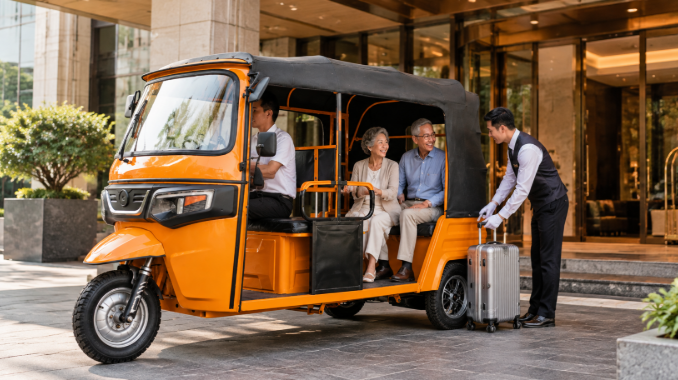
For electric tuk tuk importers and commercial fleet operators, passenger comfort and long-term durability are important factors when choosing a vehicle. While motor power, battery range and seating capacity often receive the most attention, suspension design plays an equally important role in everyday transportation.
Electric tuk tuks may operate on smooth urban streets, uneven secondary roads, speed bumps and roads affected by frequent commercial traffic. These conditions create repeated vibrations and impacts that influence passenger comfort, vehicle stability and component wear. A suitable suspension system helps manage these forces while supporting the vehicle under different passenger loads.
For overseas distributors, understanding suspension configurations can help identify electric tuk tuks that better match local transportation requirements and customer expectations.
1. How Suspension Systems Influence Passenger Comfort and Vehicle Stability
The primary purpose of a vehicle suspension system is to manage road impacts while helping the tyres maintain appropriate contact with the road surface.
When an electric tuk tuk passes over a bump or uneven section, the wheels move relative to the vehicle body. Springs support the load and absorb part of the movement, while dampers control oscillation and help prevent excessive bouncing.
Without an appropriately designed suspension system, passengers may experience stronger vibrations and repeated vertical movements, particularly during longer journeys.
This is especially relevant for commercial passenger transportation.
A tuk tuk operating as a neighborhood taxi may complete many short trips every day. A vehicle serving hotels, resorts or community shuttle routes may carry different passenger groups throughout its operating schedule.
In both situations, ride comfort can influence the customer's overall transportation experience.
Different suspension arrangements provide different operating characteristics.
Some electric passenger tricycles use integrated front shock absorbers and rear axle assemblies designed for relatively straightforward commercial operation.
Other models use independent suspension systems, allowing wheel movement to be managed through separate suspension arrangements.
Independent suspension can offer advantages in controlling wheel movement and improving ride quality on certain uneven surfaces. However, its actual performance depends on suspension geometry, spring stiffness, damper characteristics, vehicle weight and component quality.
TRI-GLOBAL, the electric vehicle brand operated through Shanghai Xinhuanhai International Trade Co., Ltd., offers passenger electric tuk tuks with different suspension configurations.
Its Standard Single-Row Electric Tuk Tuk 3+1 features an integrated front shock-absorbing arrangement and a rear axle with a truss arm.
The Deluxe Single-Row Electric Tuk Tuk 3+1 uses independent front and rear suspension, providing a different configuration for buyers evaluating passenger comfort and vehicle handling.
These differences illustrate why importers should compare suspension specifications rather than judging ride quality solely by vehicle appearance.
A well-matched suspension system should provide controlled movement, reasonable passenger comfort and predictable handling under the intended operating conditions.
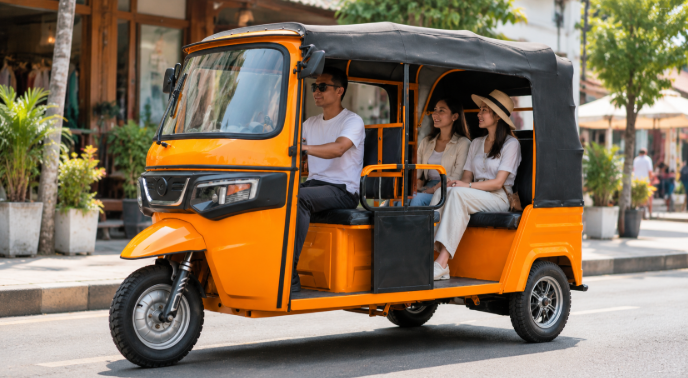
2. Why Suspension Design Matters for Long Term Commercial Durability
Suspension components experience repeated mechanical loads whenever an electric tuk tuk operates.
Every pothole, speed bump, uneven surface and change in passenger load creates forces that must be managed by the suspension system and its connection points.
Over time, these repeated forces can contribute to wear in shock absorbers, springs, bushings, bearings, joints and mounting components.
For commercial operators, suspension durability is therefore closely related to vehicle availability and maintenance requirements.
A passenger tuk tuk regularly operating near its maximum permitted load may experience different suspension stresses from a vehicle carrying fewer passengers on smooth roads.
Road conditions also influence component wear.
Vehicles operating on poorly maintained streets, gravel surfaces or roads with frequent bumps may require more frequent suspension inspection than vehicles operating in controlled resort environments.
However, a suspension system should not be evaluated simply by the number of components or its apparent structural complexity.
A more sophisticated design is not automatically more durable.
Component materials, manufacturing quality, mounting strength, lubrication requirements and appropriate suspension tuning all influence long-term reliability.
For example, an excessively soft suspension may allow uncomfortable body movement or bottoming under heavy loads. An excessively stiff configuration may transmit greater impacts to passengers and other vehicle components.
The ideal design balances load support, damping performance, vehicle stability and acceptable ride comfort.
TRI-GLOBAL's Deluxe Forward-Facing Double-Row Electric Tuk Tuk 6+1 provides a larger passenger configuration with a 4000W motor and independent front and rear suspension.
This type of vehicle highlights the importance of matching suspension design to passenger capacity and intended commercial use.
Buyers should also consider the effect of suspension condition on other vehicle systems.
Worn components or incorrect alignment can affect handling and contribute to uneven tyre wear. Loose mounting points may create abnormal noise or additional mechanical stress.
For fleet operators, regular suspension inspections and correct replacement components are important parts of maintaining vehicle reliability.
3. What Importers Should Check When Comparing Electric Tuk Tuk Suspension Systems
For international buyers, choosing an appropriate suspension configuration requires more than comparing the words "standard" and "independent" in a product catalog.
The first step is to understand the intended operating environment.
Buyers should identify typical road surfaces, passenger loads, travel speeds, daily operating distances and the frequency of road impacts.
A tuk tuk used mainly for short-distance resort transportation may have different suspension requirements from one operating commercially on uneven city streets.
Importers should also request detailed technical information from the supplier.
Important areas to review include the front and rear suspension arrangement, shock absorber specifications, spring configuration, mounting points and compatible replacement components.
Suspension performance should ideally be assessed through representative vehicle testing.
A practical evaluation can include checking ride comfort with different passenger loads, observing excessive bouncing, assessing vehicle handling and listening for abnormal suspension noises.
Testing should be carried out under controlled conditions and within the vehicle's approved load limits.
For distributors planning larger orders, maintenance requirements should be evaluated alongside ride comfort.
Some suspension configurations may involve more serviceable components, while others may require different replacement parts or specialized maintenance procedures.
Shanghai Xinhuanhai International Trade Co., Ltd., through its TRI-GLOBAL brand and manufacturing cooperation with Xuzhou Youyi Power Equipment Co., Ltd., supplies different passenger electric tuk tuk configurations for international markets.
The company also promotes OEM customization, spare-parts support and technical communication services for overseas distributors.
These capabilities provide opportunities for buyers to discuss suspension specifications, vehicle configurations and maintenance requirements before confirming an order.
For markets in Africa, Latin America and Southeast Asia, sharing photographs or videos of representative roads can help suppliers better understand local operating conditions.
Before committing to a large commercial fleet, importers may also evaluate a sample vehicle on suitable local routes.
Feedback from drivers and passengers, combined with maintenance observations, can help determine whether the selected suspension configuration meets practical operating expectations.
The goal is not simply to purchase the most advanced suspension system available, but to select one that provides appropriate comfort, reliability and serviceability for the target market.
Conclusion
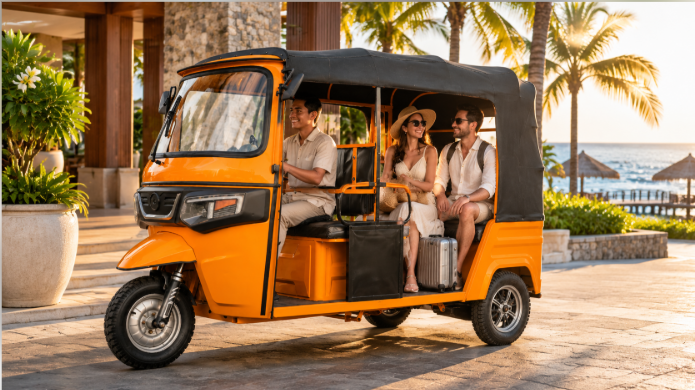
Suspension design plays an important role in electric tuk tuk passenger comfort, vehicle stability and long-term durability.
Integrated shock-absorbing systems and independent suspension configurations offer different characteristics, but actual performance depends on the complete vehicle design, passenger load, road conditions and component quality.
For importers and commercial fleet operators, suspension selection should consider ride comfort, structural connections, maintenance requirements and realistic operating conditions.
With standard and deluxe passenger electric tuk tuk configurations available through TRI-GLOBAL, overseas buyers can compare different suspension arrangements and discuss suitable vehicle specifications for their markets.
Ultimately, a reliable electric tuk tuk suspension system is not defined by complexity alone. It is determined by how effectively the complete vehicle manages road impacts, supports passengers and maintains dependable performance throughout daily commercial operation.
Related Articles
 Company News
TRI-GLOBAL Launches New Tuk Tuk X Series with Upgraded Lithium Battery
Discover the Xinhuanhai Tuk Tuk X Series with an upgraded lithium battery system, reinforced chassis and flexible passenger configurations.
Read More Tuk Tuk Technology
What Importers Should Know About Electric Tuk Tuk Packaging and Container Loading
Learn key tips on electric tuk tuk packaging and container loading for imports from China. Ensure safe shipping and avoid damage with this importer guide.
Read More Company News
Before the Assembly Line Starts: How Xinhuanhai Controls Incoming Materials
See how Xinhuanhai reviews frames, electrical parts, wheels and other incoming materials before electric tuk tuk assembly begins.
Read More