

TRI-GLOBAL News & Insights
In-depth articles, product stories and thought leadership from TRI-GLOBAL.
What Importers Should Know About Electric Tuk Tuk Packaging and Container Loading
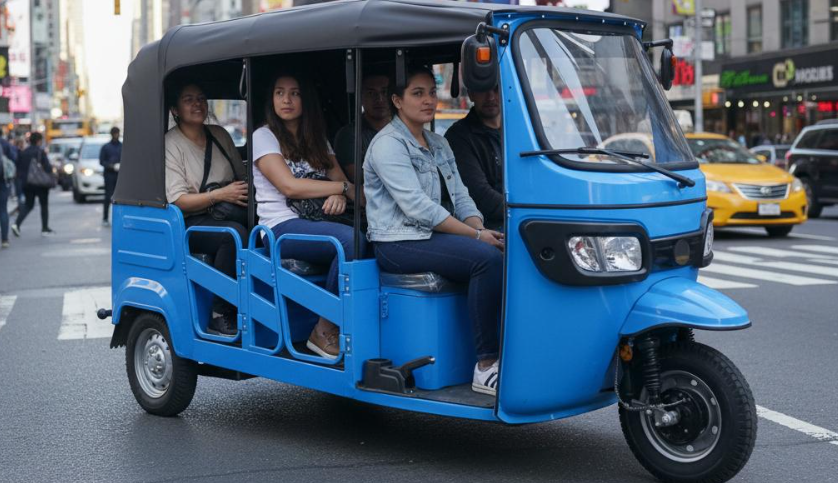
For international importers, purchasing electric tuk tuks from China involves more than selecting vehicle specifications and negotiating prices. Packaging and container loading can directly influence freight costs, vehicle protection, unloading procedures and the amount of assembly work required after shipment.
Electric passenger tricycles and cargo three-wheelers come in different dimensions, body structures and battery configurations. These differences affect how vehicles should be prepared for international transportation. A poorly planned shipment may result in wasted container space, damaged components or unexpected expenses at the destination port. Understanding the available shipping configurations and confirming packaging requirements before production is completed can help buyers manage international orders more effectively.
1. Choose the Right Packaging and Shipping Configuration for Your Order
The first decision importers should make is whether electric tuk tuks will be shipped fully assembled or in an agreed partially disassembled configuration.
Fully assembled vehicles may reduce preparation work after arrival because most components are already installed. However, their complete dimensions can limit container utilization, particularly when multiple passenger vehicles or large cargo tricycles are included in the same shipment.
Partially disassembled shipping may provide greater packaging flexibility, depending on the vehicle design and the assembly capabilities of the destination market.
Some buyers also investigate SKD or CKD arrangements. These terms generally refer to different levels of vehicle disassembly, but their exact meaning, permitted use and customs treatment should be confirmed for each transaction.
Importers should never assume that a knocked-down shipment automatically qualifies for lower import duties.
Vehicle dimensions are particularly important when planning container loading.
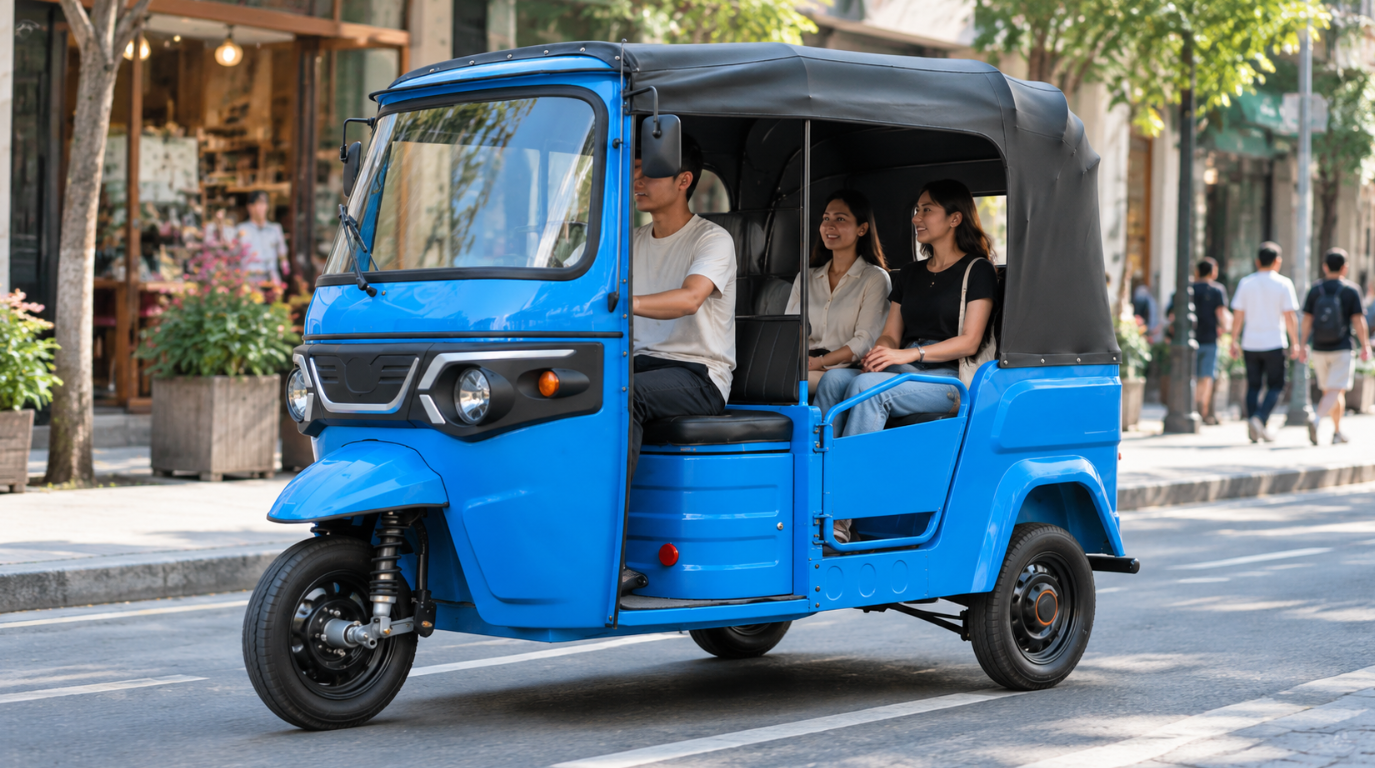
For example, TRI-GLOBAL's Standard Single-Row Electric Tuk Tuk 3+1 measures approximately 2650 × 1350 × 1800 mm, according to its published product specifications.
Its Enclosed-Box Electric Cargo Tricycle measures approximately 3450 × 1500 × 1900 mm.
These dimensional differences illustrate why container loading plans must be developed for each model rather than using one standard quantity for every electric three-wheeler.
Buyers should request a preliminary loading plan showing vehicle dimensions, packaging dimensions, assembly condition and estimated units per container.
For mixed-model orders, the supplier should also clarify how different vehicles will be positioned and secured.
Shanghai Xinhuanhai International Trade Co., Ltd., operating the TRI-GLOBAL brand, coordinates international purchasing requirements with its manufacturing partner, Xuzhou Youyi Power Equipment Co., Ltd.
Through this manufacturing-and-trade structure, overseas buyers can discuss vehicle configurations, packaging expectations and shipping arrangements before confirming commercial orders.
A suitable shipping configuration should balance container utilization, vehicle protection, destination assembly requirements and total logistics cost.
2. Protect Vehicles and Electrical Components During Container Transportation
Ocean transportation can expose vehicles to vibration, handling impacts, movement and changing temperature or humidity conditions.
Proper packaging and cargo securing are therefore essential for protecting electric tuk tuks during international shipment.
Vehicles should be secured using an appropriate loading and restraint plan. Wheels, chassis members and designated securing points must be considered so that the vehicle cannot move excessively during transportation.
Suitable blocking, restraint materials and protective coverings may be required depending on the shipping configuration.
Sensitive components also need attention.
Exterior body panels, lights, mirrors, seats, windscreens and other vulnerable parts can be damaged if they are not adequately protected.
Electrical connectors, chargers and removable accessories should be secured and identified according to the approved packing arrangement.
Moisture protection is another important consideration, particularly for international shipments involving long sea routes and varying climatic conditions.
Packaging should protect relevant components without trapping unnecessary moisture or creating additional damage risks.
Battery transportation requires separate planning.
Electric tuk tuks may use lithium-ion or lead-acid batteries, depending on the selected vehicle configuration.
Importers should confirm the installed battery type, whether batteries will be transported with the vehicles or separately, and the applicable shipping requirements.
For lithium-ion battery-powered vehicles transported by sea, the relevant dangerous-goods classification and documentation must be reviewed under the applicable International Maritime Dangerous Goods Code and carrier requirements.
Shipping arrangements should be confirmed with a qualified freight forwarder and the shipping line before booking.
These requirements should never be handled as ordinary packaging details.
TRI-GLOBAL's product range includes passenger vehicles with lithium-ion battery configurations and cargo vehicles offering different battery options.
This variety makes battery and charger information an important part of export preparation.
Importers should request clear written confirmation of the agreed packaging method, battery arrangement and transportation documentation.
3. Verify Container Loading Documents and Arrival Preparation Before Shipment
Before electric tuk tuks leave the manufacturing facility, importers should confirm that the shipment matches the purchase agreement.
Vehicle quantity, model configuration, accessories, spare parts and identification information should be checked against the approved order.
Packaging dimensions and weights should also be verified because they affect the final loading arrangement and shipping documentation.
A practical pre-shipment review can include photographs of the finished vehicles, packaging condition, securing arrangements and completed container loading.
Importers may also request a container loading record showing the container number, seal number and quantities loaded.
Commercial documents should be prepared according to the transaction and destination requirements.
These may include a commercial invoice, packing list, bill of lading, relevant battery transport documents and other certificates or declarations required for customs clearance.
The exact documentation depends on the destination country, shipping method and product configuration.
Shanghai Xinhuanhai International Trade Co., Ltd. manages international sales and export coordination under the TRI-GLOBAL brand, while its manufacturing partner provides production and engineering support.
This division of responsibilities provides overseas buyers with a contact point for discussing approved vehicle specifications, export arrangements and supporting documentation.
For distributors importing larger quantities, arrival preparation is equally important.
If vehicles are partially disassembled, the buyer should confirm the required assembly procedures, tools, technical instructions and replacement components before the shipment arrives.
Warehousing and unloading arrangements should also be planned in advance.
Once the container reaches its destination, importers should inspect the shipment for visible damage, confirm quantities and document discrepancies promptly according to the applicable insurance and carrier procedures.
For long-term distributor cooperation, maintaining packaging specifications and loading records can also help improve consistency across repeat orders.
A well-organized export shipment should therefore be evaluated not only by the number of vehicles loaded but also by how safely and efficiently those vehicles can be received and prepared for local operation.

Conclusion
Electric tuk tuk packaging and container loading are important parts of international vehicle procurement.
Importers should compare fully assembled and partially disassembled shipping options, confirm actual container capacity, protect vehicles during transportation and review battery-related shipping requirements.
Accurate documentation, appropriate cargo securing and clear arrival preparation can help reduce avoidable logistics problems.
Through its manufacturing cooperation and international export services, TRI-GLOBAL provides overseas buyers with a channel for discussing electric tuk tuk specifications, packaging requirements and shipment coordination.
For importers and distributors, the most effective shipping strategy is not simply to fit the maximum number of vehicles into a container. It is to balance loading efficiency, transportation safety, regulatory compliance and the practical requirements of receiving vehicles in the destination market.
Related Articles
 Company News
A Small Vehicle with Big Business Potential: Five Ways to Earn with an Electric Tuk Tuk
Explore five practical electric tuk tuk business uses, from local passenger service and tourism to deliveries, mobile retail and community transport.
Read More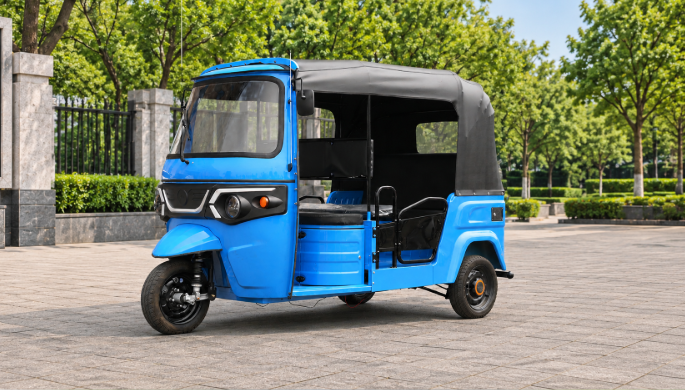 Company News
Why Electric Tuk Tuks Are Gaining Attention Across African Markets
Across Africa, transportation needs vary significantly from large capital cities to smaller towns, tourism areas and rural communities. In many locations, short-distance passenger transport remains an essential part of everyday mobility, while small businesses also need affordable vehicles for movin…
Read More Tuk Tuk Technology
How Electric Three-Wheelers Improve Last-Mile Delivery Operations
Learn how electric three-wheelers support last-mile delivery through right-sized capacity, route efficiency and flexible cargo-body options.
Read More