


TRI-GLOBAL News & Insights
In-depth articles, product stories and thought leadership from TRI-GLOBAL.
Electric Cargo Tricycle Buying Guide: 8 Specifications Importers Should Compare
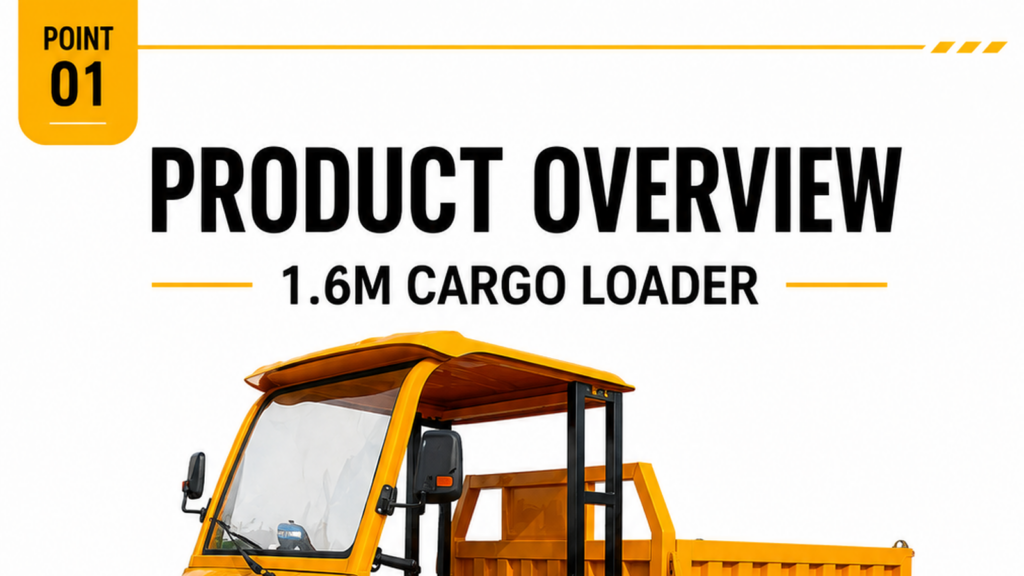
The best electric cargo tricycle is not necessarily the model with the largest motor or the longest advertised range. It is the vehicle whose complete specification matches the job, road conditions, charging plan and maintenance capability of the buyer’s market.
This guide gives importers and fleet operators eight areas to compare before requesting a final quotation.
1. Payload and load distribution
Start with the heaviest normal load, not an occasional extreme load. A suitable vehicle must carry the goods while maintaining stable steering, effective braking and acceptable climbing performance. Ask how payload is defined and whether it includes the driver, body, battery or accessories.
Load distribution also matters. Dense goods placed too far behind the rear axle can affect handling. For mixed cargo, specify tie-down points, side-panel height and the expected centre of gravity.
2. Cargo body type and dimensions
An open bed is flexible for produce, construction supplies and bulky goods. A fully enclosed box protects parcels and food from weather and improves security. Four-side-opening beds can speed loading where access is limited.
Compare internal length, width and height—not only external dimensions. Also review door position, floor material, drainage, corrosion protection and whether custom branding is required.
3. Real-world range
Range changes with battery capacity, payload, speed, gradients, temperature, tyre pressure and driving habits. TRI-GLOBAL standard configurations are generally designed around common commercial requirements, and many models can be configured for approximately 50–90 km per charge under suitable conditions. Final range must be confirmed against the chosen vehicle and route.
For reliable planning, map the longest daily route and include a reserve. If the vehicle cannot be charged during working hours, avoid designing the operation around a laboratory maximum.
4. Battery chemistry and charging
Lead-acid batteries usually offer a lower initial price and are familiar to many service networks. Lithium batteries reduce weight and can provide higher usable energy, more flexible charging and longer service potential when correctly managed.
Ask about battery voltage, capacity, charger input, charging time, battery-management protection and replacement logistics. The correct decision depends on daily utilization and local support, not chemistry alone.
5. Motor, controller and climbing requirement
Motor wattage is only one part of the drivetrain. Gear ratio, controller calibration, tyre size, vehicle weight and thermal protection all influence start-up torque and hill performance. Provide the steepest expected gradient and typical payload when requesting a recommendation.
For hot climates or high-duty routes, discuss cooling, wiring protection and continuous rather than only peak performance.
6. Chassis, suspension and braking
Commercial vehicles experience repeated loading and rough road impacts. Review frame construction, welding quality, coating, rear suspension, wheel and tyre specification, parking brake and service-brake configuration. Ask for inspection points that distributors can check before delivery to the end customer.
7. Destination-market compliance
Registration and import requirements differ across countries. Buyers should identify rules for vehicle class, speed, lighting, braking, mirrors, reflectors, identification numbers, charger plugs and documentation before production.
A clear compliance list reduces late-stage changes. If local homologation or testing is required, build the sample and approval stage into the project schedule.
8. Spare parts and after-sales support
A commercial fleet earns money only when vehicles are available. Request a recommended spare-parts package for the first service period, including fast-wearing and route-critical items. Confirm manuals, wiring diagrams, training, warranty scope and the procedure for technical claims.
Compare total operating value, not only unit price
A lower purchase price can be offset by unsuitable range, downtime, expensive batteries or slow parts supply. Compare vehicle cost, freight, duty, charging equipment, scheduled maintenance, battery replacement assumptions and expected utilization on the same basis.
TRI-GLOBAL can help translate your operating profile into a practical passenger, cargo or delivery configuration. Browse our electric tricycle products or send your route and load requirements to monica@xhhtuktuk.com.
Related Articles
 Company News
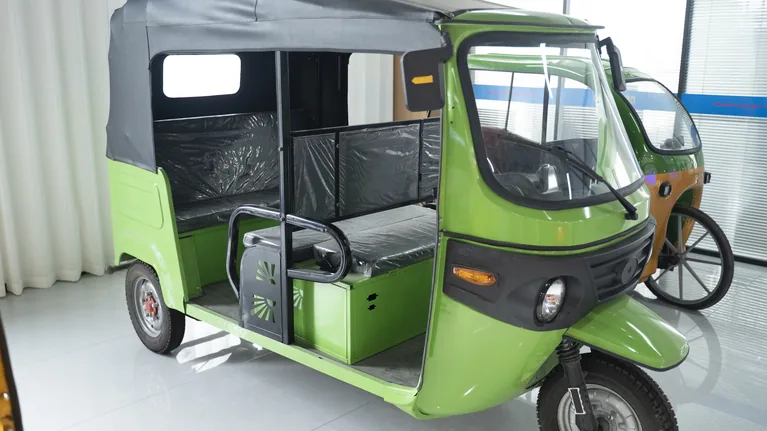
A Little More Room Can Change the Whole Journey
Comfort is not always about luxury materials or complicated features. Sometimes it simply means having enough shoulder room, an easier step into the cabin and space for a family to bring a few bags without feeling crowded. The L3 1.3M Deluxe Electric Passenger Tuk Tuk adds that welcome room to…
Read More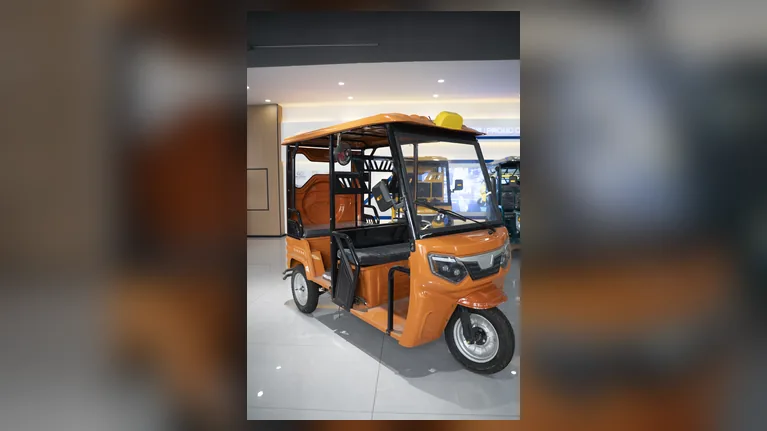 Company News
A Shuttle Where People Can Still Talk to Each Other
Some journeys are better when passengers are not all staring at the road ahead. In a face-to-face cabin, children can sit opposite their grandparents, hotel guests can talk about the day, and neighbors can share a short ride without losing the feeling of being together. That is the human advantage…
Read More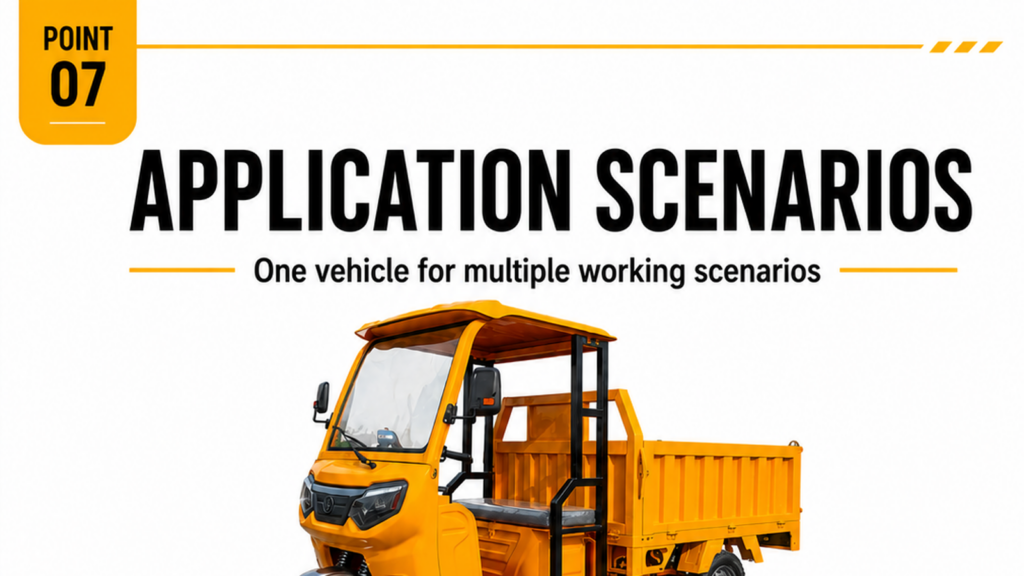 Technology
How Electric Three-Wheelers Improve Last-Mile Delivery Operations
Learn how electric three-wheelers support last-mile delivery through right-sized capacity, route efficiency and flexible cargo-body options.
Read More