
TRI-GLOBAL News & Insights
In-depth articles, product stories and thought leadership from TRI-GLOBAL.
From Chassis Assembly to Final Inspection: Inside Xinhuanhai’s Electric Tuk Tuk Factory
A reliable electric tuk tuk is not created in one dramatic moment. It takes shape through hundreds of careful decisions—a frame aligned correctly, a cable routed cleanly, a controller secured firmly, and a final inspection completed by people who know what the vehicle will face after it leaves the factory.
Xinhuanhai works closely with its manufacturing partners to connect practical factory experience with the needs of overseas distributors and fleet operators. This photo story takes you inside the production process and introduces the people behind each export-ready electric three-wheeler.
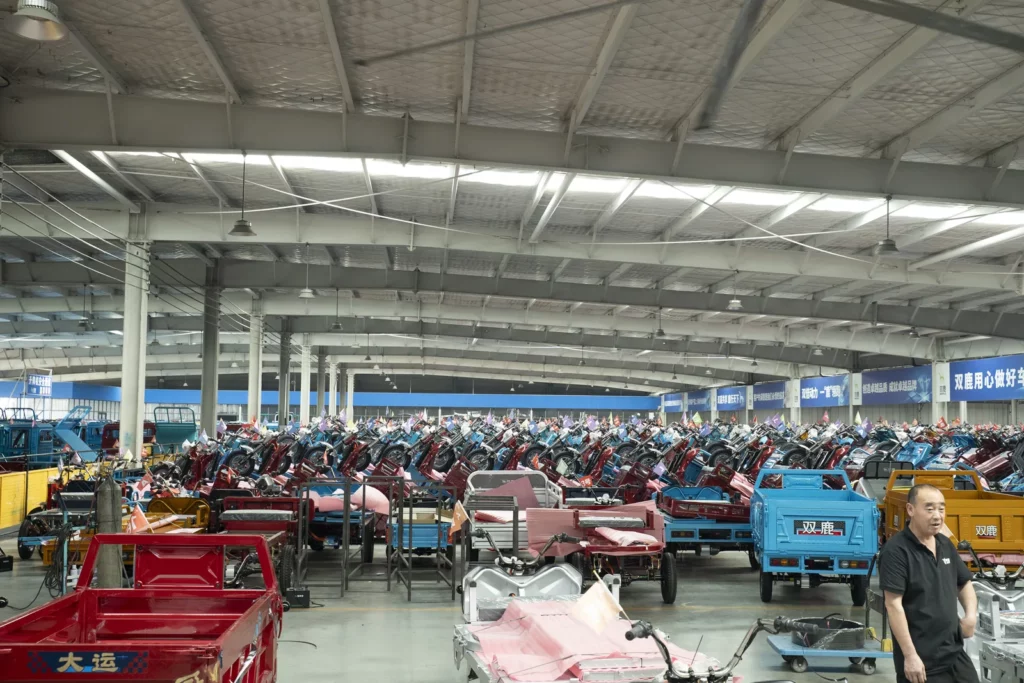
A Factory Floor Built Around Repeatable Work
When a distributor orders vehicles for daily passenger service, neighborhood transport or commercial delivery, consistency matters just as much as appearance. The production floor is organized into clear workstations so that each stage can be completed, checked and passed forward in sequence.
This approach helps teams handle different body styles and configurations without losing control of the details. Passenger cabins, open cargo beds, enclosed delivery boxes, motor power, battery type and local accessories may change from order to order, but the underlying production discipline remains the same.
The Chassis Is Where Reliability Begins
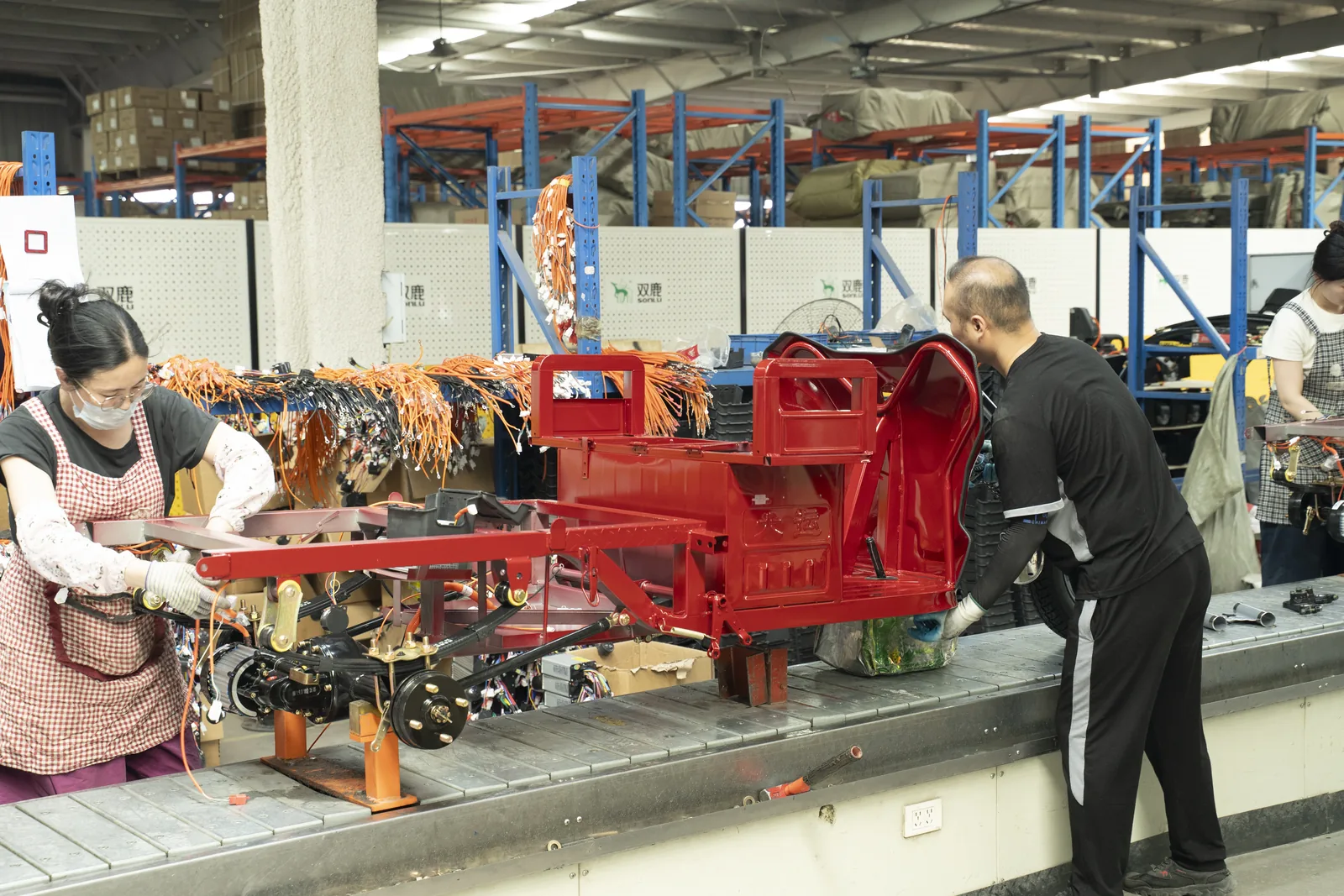
The frame carries the vehicle, its passengers or cargo, and the repeated stresses of real roads. During chassis assembly, technicians install and align structural parts, suspension components, axles, braking hardware and the main electrical routing. The work is hands-on because small details—such as a fastening point, cable clearance or the position of a moving component—can affect how the vehicle performs months and years later.
For an importer, this stage is also where a specification becomes physical. Payload needs, road conditions, wheel and tire choices, motor rating and battery configuration should all be discussed before mass production. Xinhuanhai helps translate those market requirements into a practical production specification with the factory team.
Electrical Installation Requires Order and Care
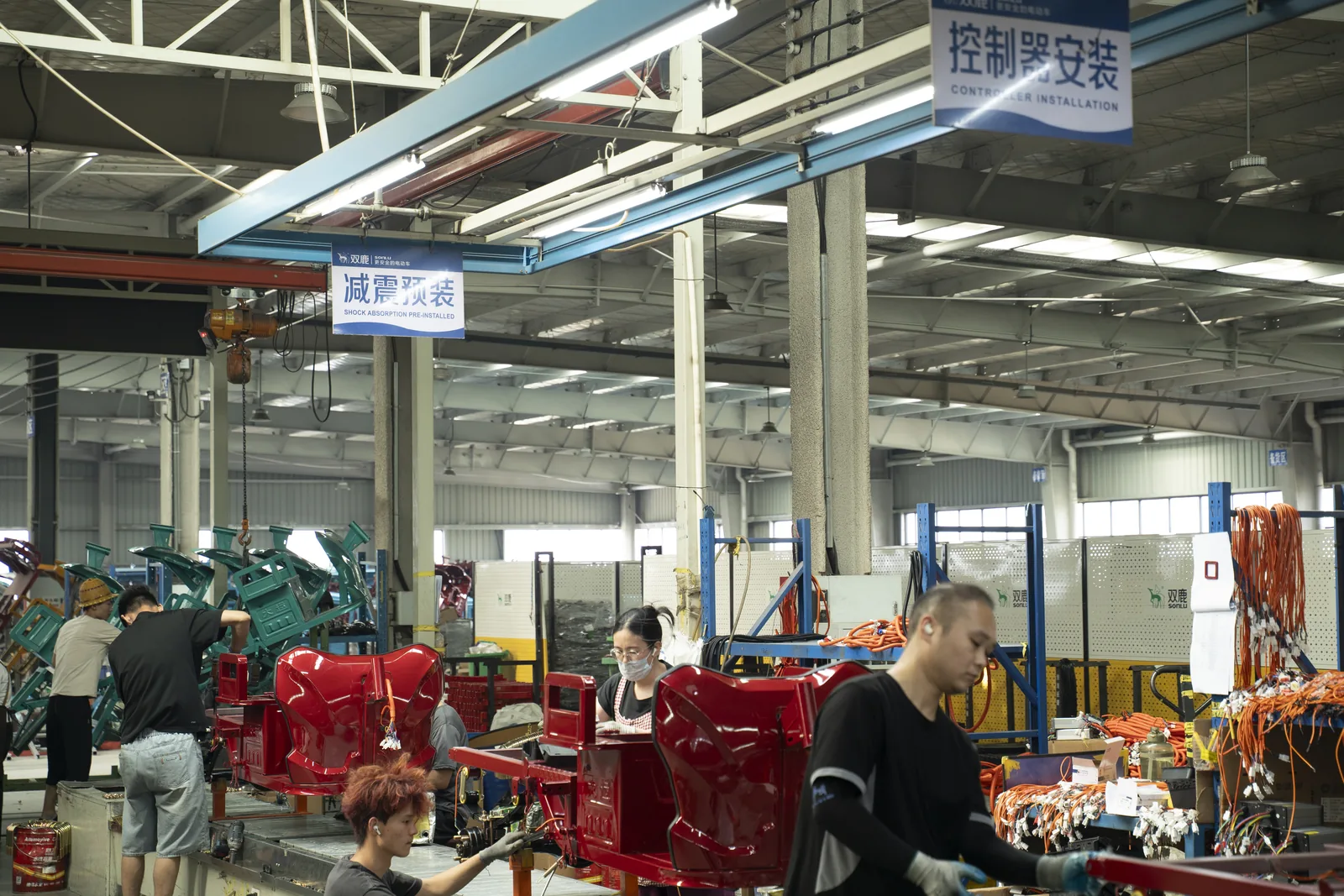
An electric three-wheeler depends on the relationship between its battery, controller, motor, wiring harness and charging system. On the assembly line, these components are fitted in a planned order so connections remain accessible and protected. Technicians also check that wiring is secured away from sharp edges, heat sources and moving parts.
That careful installation is especially important for vehicles working long shifts in hot, dusty or humid environments. A well-matched electrical system is easier to maintain, easier to diagnose and more dependable for the driver who relies on the vehicle every day. It also makes future spare-parts support more straightforward for local service teams.
Quality Is Checked by People, Not Assumed
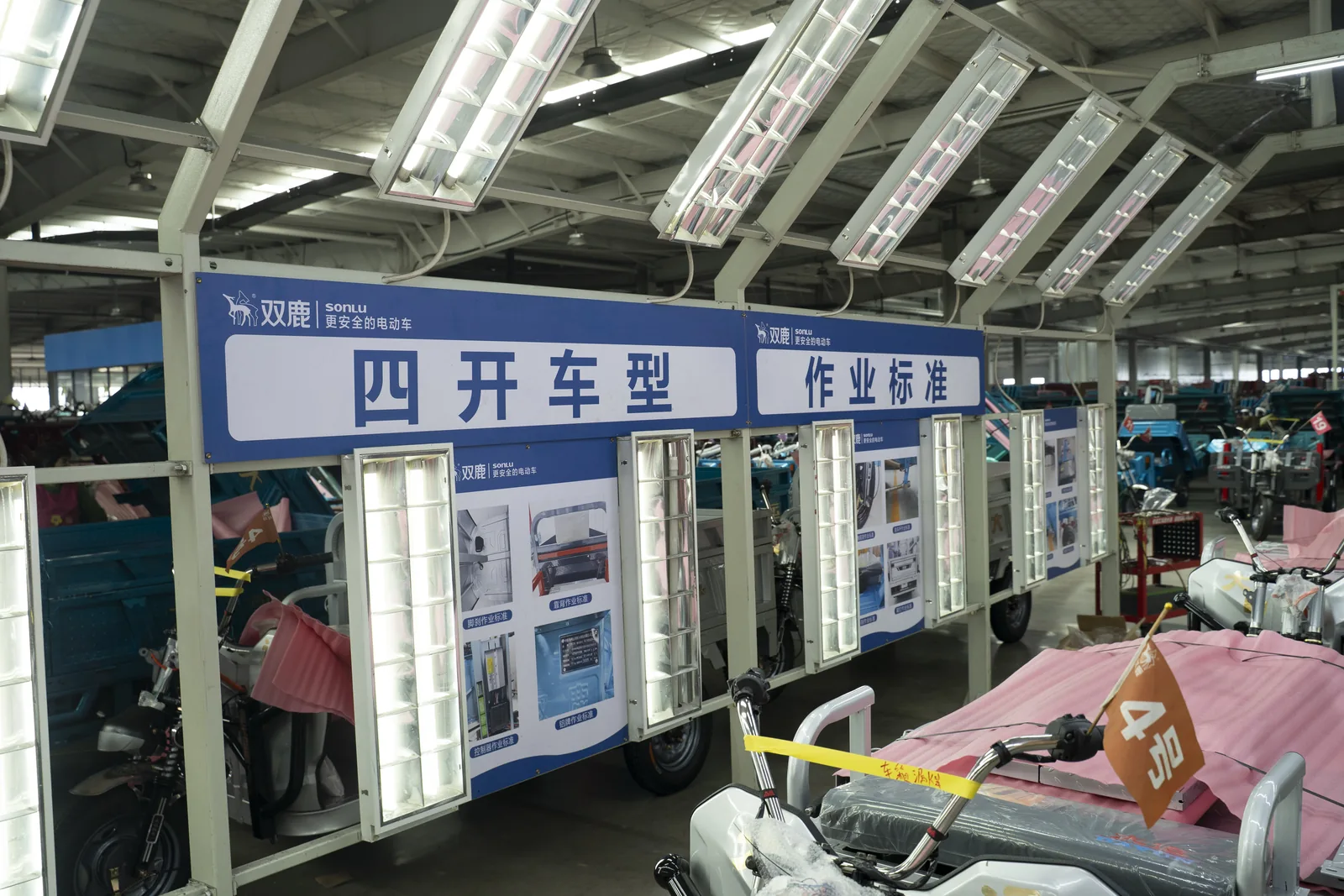
Before packing, a finished vehicle must be looked at as a complete working system. The inspection team checks visible workmanship and functional items such as lights, horn, steering, brakes, switches, fasteners, charging and basic driving response. Any issue found at this stage is easier to correct at the factory than after the vehicle has crossed an ocean.
Final inspection is also a human moment. It is the point where the work of many different stations becomes one vehicle that will soon carry a family, help a small shop make deliveries, move farm goods to market or support a local transport business. That real-world purpose is why careful production matters.
Preparing Vehicles for Export Markets
Export preparation goes beyond building the vehicle. Packing method, removable parts, container loading, documentation, spare-parts planning and destination requirements all need to be considered. For customized orders, Xinhuanhai coordinates these details before production is finalized, reducing surprises at delivery.
Customers can discuss body color, passenger or cargo layout, battery chemistry and capacity, motor power, branding and other OEM/ODM options. Our role is to keep communication clear between the buyer and the production team, then support the order through manufacturing, inspection, shipment and after-sales service.
Come Closer to the Production Process
We welcome customers to arrange a factory visit or a remote video inspection. Seeing the line, meeting the people and reviewing a sample vehicle together often answers questions that a specification sheet cannot.
Planning an electric tuk tuk project for passenger transport, last-mile delivery or cargo work? Explore our electric three-wheeler range, learn more about Xinhuanhai, or contact our team at monica@xhhtuktuk.com or +86 151 2110 8670.
Related Articles
 Company News
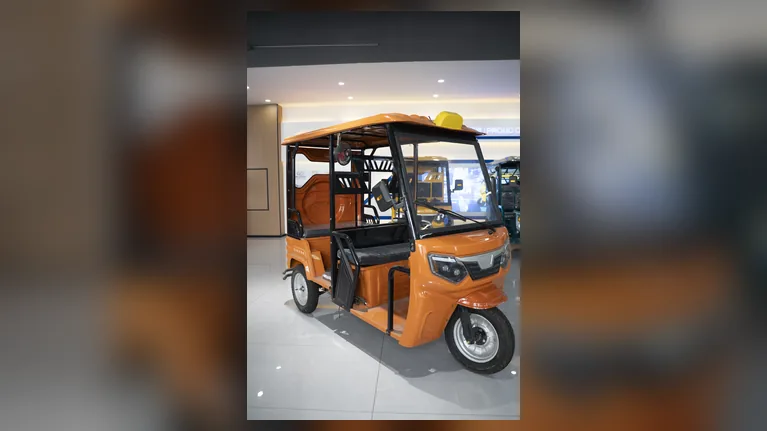
A Shuttle Where People Can Still Talk to Each Other
Discover a face-to-face 6+1 electric tuk tuk designed for community shuttles, resorts and group journeys that keep passengers connected.
Read More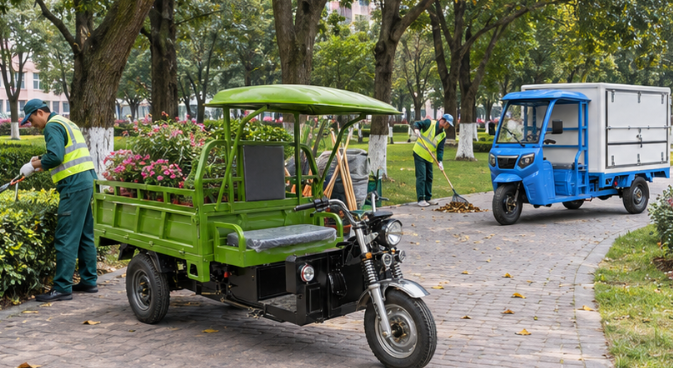 Company News
What Importers Should Check During Pre Shipment Inspection of Electric Tricycles
A practical guide for importers on electric tricycle pre shipment inspection. Learn key quality checks for electric tuk tuk inspection to avoid costly surprises before electric vehicle export shipment.
Read More Company News
Understanding Payback: A Practical Business Case for Electric Tuk Tuk Buyers
Build a realistic electric tuk tuk payback calculation using purchase cost, energy, maintenance, utilization, revenue and battery replacement assumptions.
Read More