


TRI-GLOBAL News & Insights
In-depth articles, product stories and thought leadership from TRI-GLOBAL.
How to Choose Electric Three Wheelers for Small Business Transportation
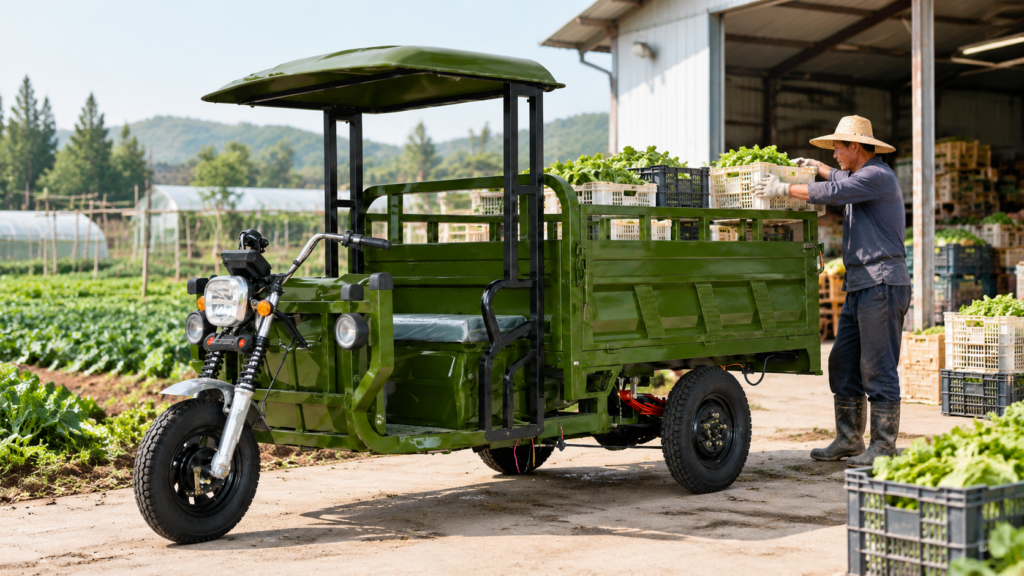
Transportation is an important part of daily operations for many small businesses. Retail stores, grocery suppliers, hardware shops, agricultural traders and independent delivery companies often need to move goods between warehouses, markets and customers. However, purchasing a conventional truck or van may not always be the most economical choice, especially when transportation distances are short and delivery volumes are relatively small.
Electric three wheelers provide an alternative for selected commercial transportation applications. Their compact dimensions, flexible cargo configurations and electric drivetrains can support local distribution, material handling and everyday business activities. For business owners, importers and distributors, the challenge is choosing a vehicle that matches actual transportation needs without increasing unnecessary purchase or operating costs.
1. Identify Your Business Transportation Needs Before Choosing a Vehicle
The first step in selecting an electric three wheeler is understanding how transportation contributes to daily business operations.
Different businesses require different vehicle configurations.
A neighborhood grocery store may transport packaged food, beverages and household products to nearby customers. A hardware supplier may carry tools, pipes and building materials, while an agricultural trader may need to transport vegetables, grain bags or animal feed between collection points and local markets.
These businesses should not automatically purchase the same type of electric cargo tricycle.
Cargo dimensions, normal loading weight, loading frequency and route distance should be evaluated before selecting a vehicle.
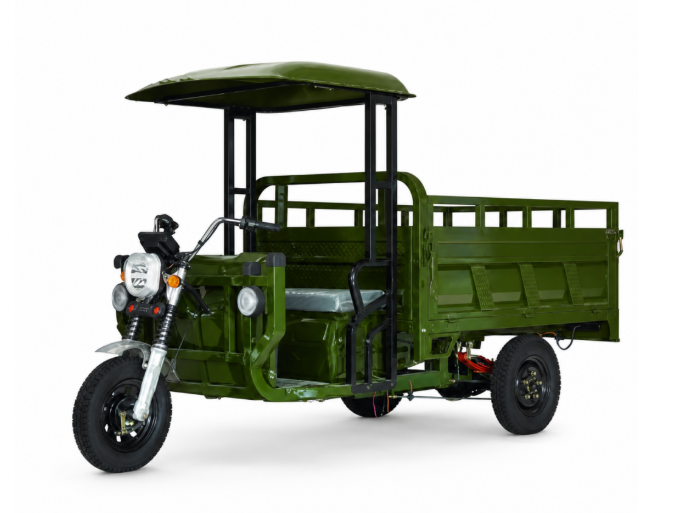
For example, businesses transporting bulky materials may benefit from an open cargo platform that allows convenient loading from different directions.
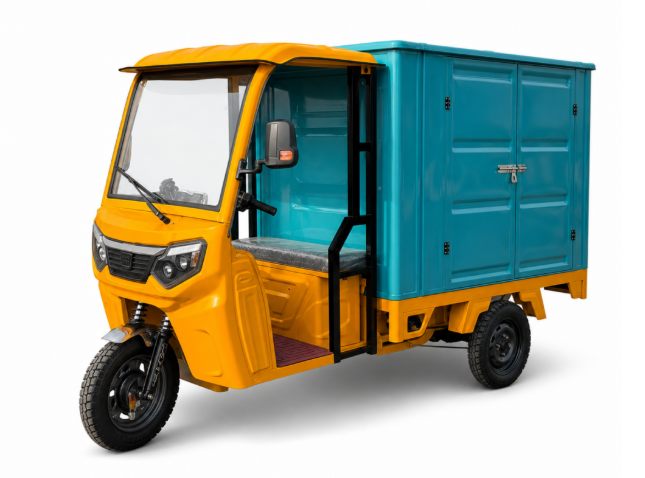
Companies distributing packaged retail goods may prefer an enclosed cargo compartment that provides protection from rain, dust and road conditions.
TRI-GLOBAL, the international electric vehicle brand operated through Shanghai Xinhuanhai International Trade Co., Ltd., offers multiple electric cargo tricycle configurations for commercial applications.
Its 1.8M Four-Side-Opening Electric Cargo Tricycle features a 1.8-meter cargo platform, a 2000W motor and a four-side-opening body designed for convenient loading.
For businesses requiring a covered cargo compartment, the KD01 Enclosed Electric Cargo Tricycle provides a compact enclosed cargo body and a 2000W motor.
These configurations allow commercial buyers to evaluate vehicle options according to the goods they transport.
However, selecting the largest available vehicle is not always necessary.
A business regularly carrying lightweight parcels may benefit more from a compact vehicle that is easier to maneuver and park. A company transporting heavier materials may require a stronger cargo platform and appropriately matched braking, suspension and drivetrain components.
Before requesting a quotation, buyers should record their average cargo weight, package dimensions, daily trips and the most demanding operating conditions.
This information provides a practical foundation for choosing the right electric three wheeler.
2. Match Vehicle Performance and Operating Costs to Daily Business Activities
After identifying cargo requirements, businesses should evaluate how the vehicle will perform during normal operations.
Daily transportation distance is one of the most important considerations.
A retailer completing several short deliveries within the same neighborhood may have different battery requirements from a wholesaler traveling between multiple commercial locations throughout the day.
Buyers should estimate daily mileage, normal loading weight, available charging time and expected operating hours.
Motor power should also be selected according to the intended workload.
A 2000W electric cargo tricycle may provide a suitable solution for certain short-distance transportation applications when its complete drivetrain is matched to the operating conditions.
For larger commercial loads or more demanding routes, buyers may need to consider a different vehicle platform or higher-power configuration.
TRI-GLOBAL's Loader 1.8 Electric Cargo Tricycle offers a 2000W motor and an 1800 × 1300 mm open cargo bed, while the Loader 2.2M features a 2500W motor and a larger 2200 × 1300 mm cargo platform.
These models provide different options for businesses evaluating cargo dimensions and transportation requirements.
However, motor power alone should not determine the purchasing decision.
Road gradients, vehicle weight, tyre configuration, braking performance and battery capacity all influence actual vehicle capability.
Operating economics are equally important.
Small businesses should consider electricity expenses, battery replacement, maintenance requirements, driver wages and vehicle financing when comparing electric three wheelers with existing transportation methods.
A practical calculation is the total monthly transportation cost divided by the number of completed delivery trips.
This allows business owners to understand whether a particular vehicle configuration provides sufficient commercial value.
Charging conditions should also be evaluated before purchase.
Businesses with centralized storage facilities may be able to charge vehicles overnight. Companies operating longer schedules may require additional charging opportunities or different battery configurations.
The ideal electric three wheeler should provide enough capacity and operating range for normal business requirements without creating unnecessary investment.
3. Choose a Supplier That Supports Business Growth and Long Term Maintenance
For small businesses, purchasing a commercial vehicle is an investment intended to support daily operations over several years.
Vehicle reliability, replacement parts and technical support should therefore be considered alongside the initial purchase price.
A vehicle that is inexpensive to purchase but difficult to repair can create unexpected downtime and reduce business productivity.
Before ordering, buyers should confirm the availability of suitable braking components, tyres, electrical controllers, chargers and other replacement parts.
Maintenance requirements should also match local technical capabilities.
In markets where specialized electric vehicle technicians are limited, access to technical documentation and reliable supplier communication becomes particularly valuable.
Shanghai Xinhuanhai International Trade Co., Ltd. operates through a manufacturing-and-trade cooperation structure with Xuzhou Youyi Power Equipment Co., Ltd.
Under the TRI-GLOBAL brand, Xinhuanhai coordinates international customer requirements, export operations and product customization, while its manufacturing partner provides production and engineering resources.
The company supplies open-bed cargo tricycles, enclosed delivery vehicles and different commercial electric three wheeler configurations for overseas customers.
It also promotes OEM customization and spare-parts support for international distributors.
For commercial buyers, these services provide opportunities to discuss cargo dimensions, motor power, battery options and other requirements before selecting a vehicle.
As a business grows, transportation needs may also change.
A small retailer may initially operate one compact delivery tricycle before expanding into a larger distribution operation.
A wholesaler may eventually require several vehicles with different cargo capacities.
For this reason, buyers should consider whether a supplier can provide different vehicle platforms and compatible replacement components for future orders.
Importers and distributors can also benefit from testing sample vehicles with representative commercial loads before committing to larger purchases.
These trials can help evaluate cargo accessibility, driving range, road performance, charging requirements and customer satisfaction.
Local vehicle registration, permitted road use and commercial payload requirements should also be confirmed before deployment.
Choosing a suitable supplier is therefore not simply about finding the lowest quotation. It is about establishing access to vehicles, technical information and after-sales resources that can support long-term business operations.
Conclusion
Choosing the right electric three wheeler for small business transportation requires a clear understanding of cargo requirements, daily operating conditions and commercial costs.
Open-bed cargo tricycles may suit agricultural products, hardware materials and general goods transportation, while enclosed cargo vehicles can support retail distribution and packaged deliveries.
Motor power, battery capacity, cargo dimensions, braking performance and maintenance requirements should be evaluated together rather than individually.
With different commercial electric three wheeler platforms and customization options available through TRI-GLOBAL, international buyers can explore suitable transportation solutions for their local markets.
Ultimately, the best electric three wheeler is not necessarily the largest or most powerful model. It is the vehicle that helps a small business transport goods reliably, control operating expenses and develop a practical foundation for future growth.
Related Articles
 Company News
A Small Electric Tuk Tuk That Brings the Whole Family Along
Discover how a compact 3+1 electric tuk tuk can support family trips, neighborhood travel and community mobility with low daily operating costs.
Read More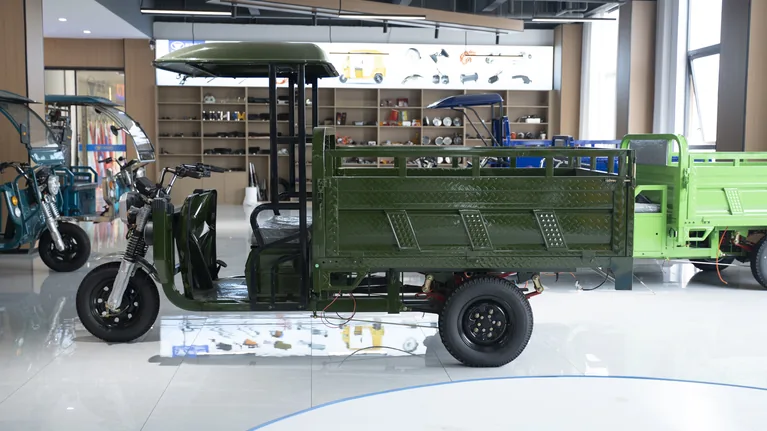 Company News
The Vehicle That Starts Work Before the Shop Opens
See how the Loader 1.8 electric cargo tricycle supports family businesses, farms and local deliveries from the first job of the day.
Read More Company News
From Market Request to Production Plan: Xinhuanhai’s OEM/ODM Workflow
Follow Xinhuanhai's OEM/ODM workflow from local market requirements and sample review to controlled electric tuk tuk production.
Read More