


Xinhuanhai News & Insights
In-depth articles, product stories and thought leadership from Xinhuanhai.
How to Choose Electric Tuk Tuks for African Roads and Operating Conditions
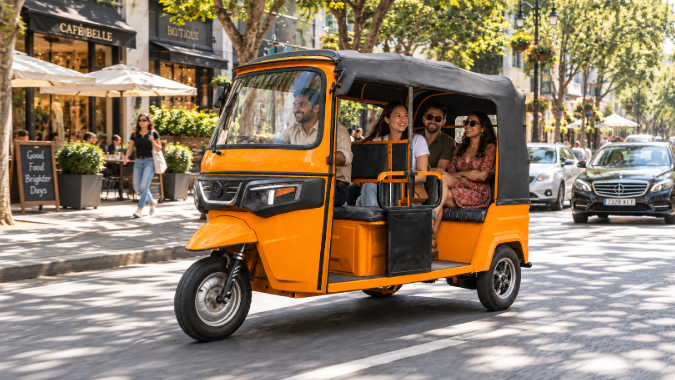
Choosing an electric tuk tuk for an African market requires more than selecting passenger capacity, motor power and battery size from a specification sheet. The same vehicle may perform very differently depending on road surfaces, gradients, passenger loads, climate, daily mileage and maintenance conditions.
Africa also cannot be treated as one operating environment. A tuk tuk working on paved urban roads in a major city may face completely different conditions from a vehicle serving secondary roads, smaller towns or peri-urban communities. For importers and distributors, the better approach is to study the intended route first and then match the chassis, suspension, drivetrain, battery and other vehicle components to those conditions.
1. Start with Road Surface Suspension Ground Clearance and Braking
Road conditions should be one of the first considerations when selecting an electric tuk tuk.
Some commercial routes may be almost entirely paved, while others can include potholes, speed bumps, uneven road edges, gravel sections or unpaved secondary roads. Vehicles operating under these conditions experience different loads from tuk tuks used mainly on smooth urban streets.
Suspension therefore deserves careful attention.
A suspension system suitable for low-speed operation on smooth roads may not provide the same durability or passenger comfort when the vehicle repeatedly encounters uneven surfaces. Buyers should discuss the intended road environment with the manufacturer rather than selecting suspension purely from a standard specification.
Ground clearance is another practical factor.
Greater clearance can be useful where vehicles need to pass uneven road sections, drainage channels or poorly maintained surfaces. However, vehicle height, center of gravity, passenger access and stability should be considered together. The goal is not simply to maximize ground clearance but to achieve an appropriate chassis setup for the intended route.
Tyres are equally important because they are the direct connection between the vehicle and the road. Tyre size, load capability and suitability for local surfaces can influence ride quality, traction and durability.
Braking should also be evaluated according to actual operating conditions.
A passenger vehicle repeatedly carrying several people through busy urban traffic may experience frequent stop-and-go operation. A vehicle working on gradients places different demands on the braking system. Buyers should therefore confirm the complete braking configuration and consider passenger load, operating speed and route characteristics together.
Before ordering, importers can provide photos or videos of typical local roads to the manufacturer. This simple step can often communicate operating conditions more clearly than a general statement such as “the roads are rough.”
2. Match Motor Battery and Payload to the Real Daily Workload
Motor power should be selected according to route difficulty and vehicle load rather than by assuming that the largest motor is automatically the best option.
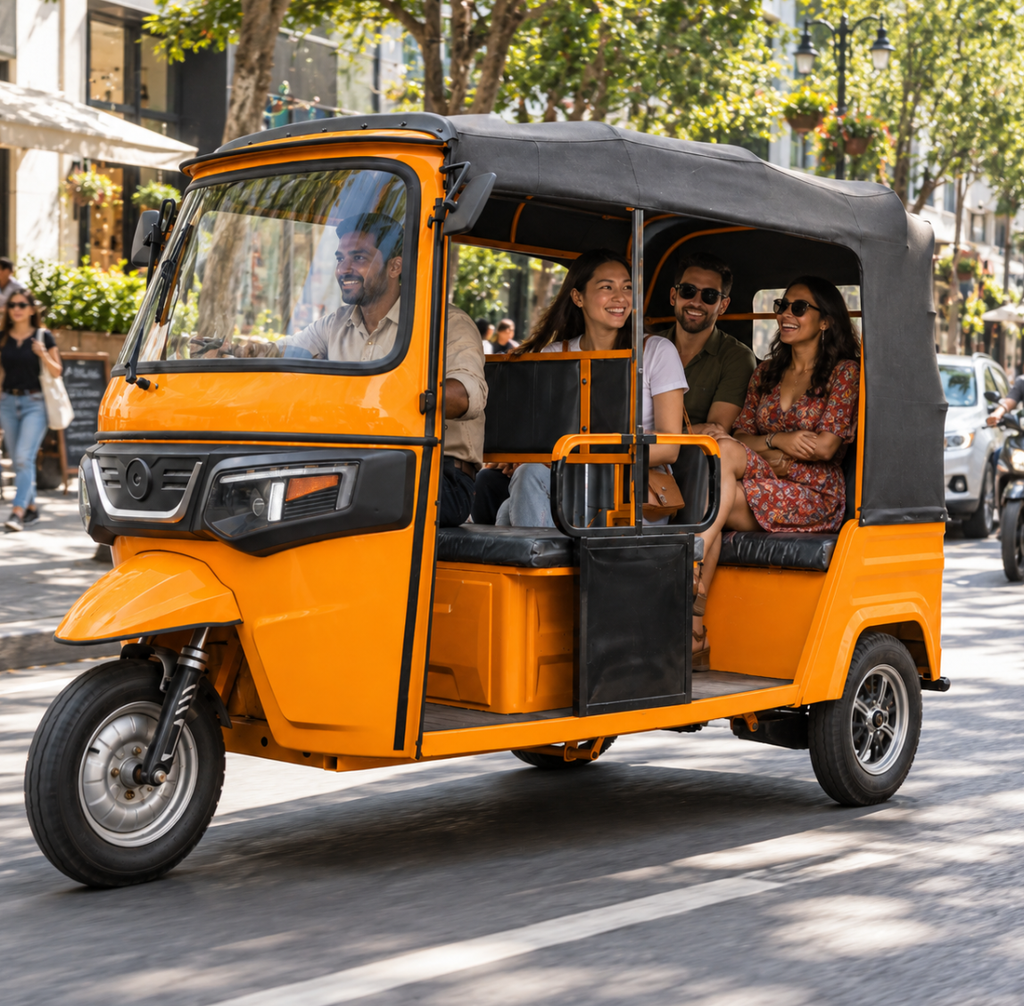
For relatively flat urban routes with moderate passenger loads, a properly configured 2000W electric tuk tuk may provide a practical balance between performance and acquisition cost. More demanding routes, heavier commercial use or frequent gradients may justify considering a higher-power configuration such as 4000W.
However, the motor cannot be evaluated independently.
Passenger capacity, battery configuration, controller, vehicle weight and road gradient all influence performance. A 3+1 passenger tuk tuk and a 6+1 vehicle operating near full capacity create different drivetrain demands even if both are used for similar distances.
Buyers should therefore provide realistic payload information.
For passenger models, this means estimating how many people will normally travel in the vehicle rather than considering only the maximum number of seats. For cargo tricycles, the expected type, weight and distribution of goods should be discussed.
Battery capacity should then be matched to the daily operating cycle.
An electric tuk tuk operating short scheduled routes and returning to a fixed location every evening may have predictable charging requirements. A commercial passenger vehicle working for longer periods may require greater usable range or a different charging strategy.
Importers should estimate normal daily mileage, busy-day mileage, passenger load and charging time before finalizing the battery.
It is also important to maintain a practical range reserve. Advertised range can vary under real operating conditions because hills, passenger load, frequent acceleration, road resistance and temperature all affect energy consumption.
Instead of designing the operation around the theoretical maximum range, buyers should select a configuration that provides sufficient capacity for normal daily work with a reasonable operating margin.
3. Consider Heat Dust Rain Charging and Local Maintenance Capability
African operating conditions are not defined only by roads.
Climate and the local service environment can be equally important when selecting a vehicle for long-term commercial operation.
In hot regions, battery installation, electrical components and charging practices deserve careful consideration. Vehicles may spend many hours outdoors and operate repeatedly during the hottest parts of the day. Buyers should discuss the expected ambient conditions with the supplier when determining the final electrical configuration.
Dust can also affect vehicles operating on unpaved or dry roads. Regular inspection and maintenance become important for components exposed to the operating environment.
Rain creates a different challenge. Markets with significant wet seasons may require greater attention to weather protection, electrical connections, canopy design and passenger comfort.
The vehicle body should therefore match the local application. An open-canopy passenger tuk tuk can be attractive for warm-weather tourism or short shuttle services, while other passenger operations may require more protection from rain and road splash.
Charging conditions must also be investigated before vehicles are imported.
Buyers should confirm local voltage, charger compatibility, parking arrangements and how long each vehicle can remain connected to a charger. Fleet operators with centralized parking may find overnight charging relatively straightforward, while independent commercial drivers may have different requirements.
Finally, local maintenance capability should influence product selection.
A successful vehicle is not only one that performs well when new. It should also be practical to service after months or years of commercial operation.
Distributors should discuss commonly required spare parts, technical documentation and replacement components before the first shipment. Standardizing important components across several models can also make local inventory and technician training easier.
For new markets, starting with a sample vehicle or small pilot fleet can provide valuable information about real range, suspension performance, component wear and customer preferences before a larger order is placed.
Conclusion
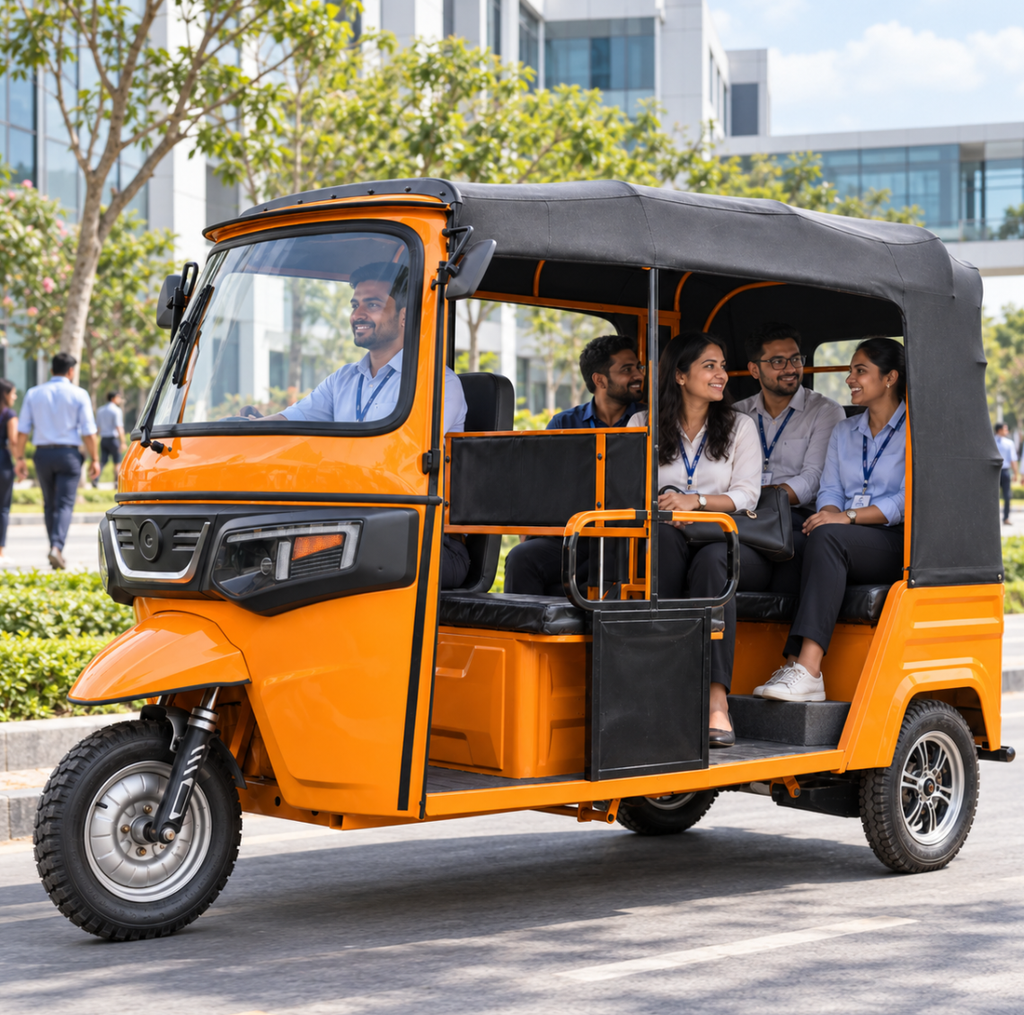
Choosing an electric tuk tuk for African roads requires a complete view of the operating environment. Road surfaces, ground clearance, suspension, tyres and braking influence durability and passenger comfort, while motor power, payload and battery capacity determine whether the vehicle can complete its daily work effectively.
Climate, charging infrastructure and local maintenance capability should also be considered before the final specification is confirmed.
Rather than selecting a standard electric tuk tuk and expecting it to suit every African market, importers and distributors should begin with real local conditions. Sharing route information, road photos, passenger loads, daily mileage and charging arrangements with the manufacturer can help create a more appropriate vehicle configuration.
The right electric tuk tuk for Africa is therefore not necessarily the vehicle with the largest motor or battery. It is the vehicle whose chassis, power system, passenger capacity and service requirements are properly matched to the roads and commercial conditions where it will actually operate.
Related Articles
 Tuk Tuk Technology
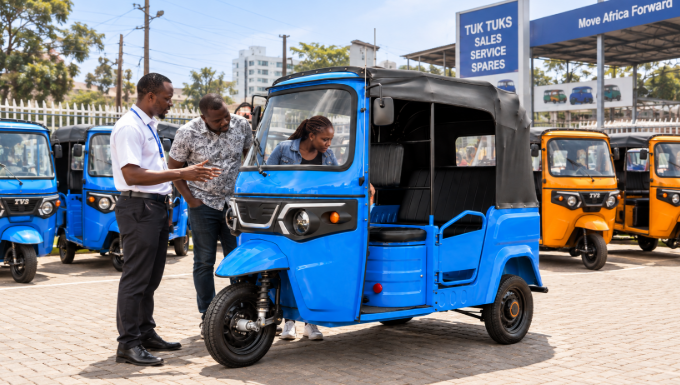
How to Evaluate Electric Tuk Tuk Demand in Kenya Before Importing
Kenya is an interesting market for electric mobility because of its growing interest in electric transportation, established motorcycle taxi services and demand for practical urban mobility solutions. However, these conditions do not automatically guarantee strong demand for electric tuk tuks in eve…
Read More Company News
A Little More Room Can Change the Whole Journey
Discover how the L3 1.3M electric passenger tuk tuk adds comfort and space for communities, resorts and short group journeys.
Read More Company News
How Electric Tuk Tuks Can Support Passenger Transportation in Senegal
Senegal is developing its urban transportation network as cities expand and mobility demands become more diverse. In Dakar and surrounding communities, residents depend on buses, shared taxis and other transportation services to travel between residential areas, workplaces, commercial districts and …
Read More