


TRI-GLOBAL News & Insights
In-depth articles, product stories and thought leadership from TRI-GLOBAL.
Lead-Acid vs Lithium Batteries for Electric Tuk Tuks: A Practical Comparison
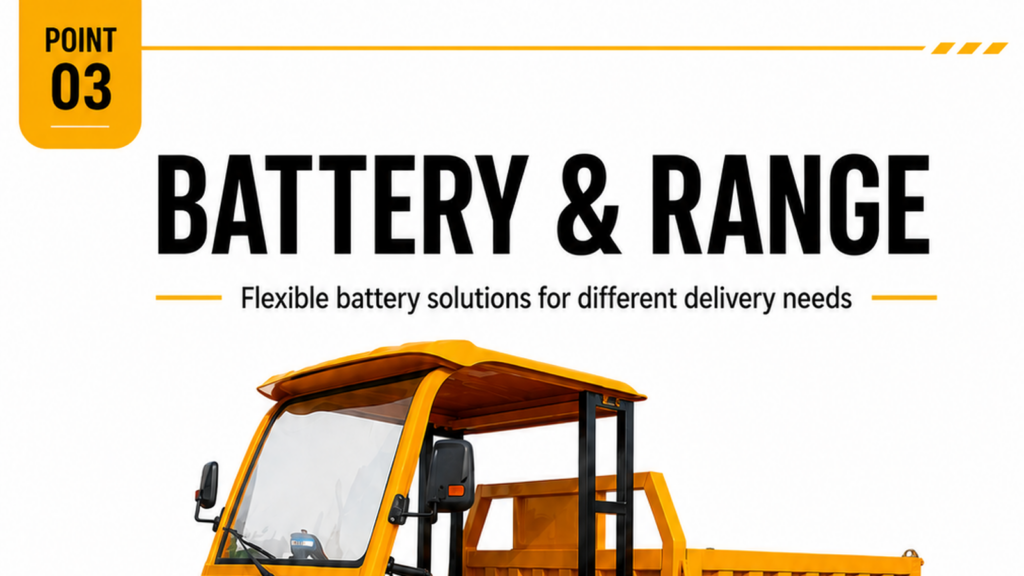
Battery selection shapes the cost, range, payload and daily availability of an electric tuk tuk. Lead-acid and lithium systems can both be appropriate, but they serve different operating priorities. Buyers should make the choice from a complete duty-cycle analysis rather than from a single price or capacity figure.
Quick comparison
| Decision factor | Lead-acid battery | Lithium battery |
|---|---|---|
| Initial purchase cost | Usually lower | Usually higher |
| Weight | Heavier for comparable stored energy | Lighter and more compact |
| Usable energy | More sensitive to deep discharge | Typically supports a higher usable share when managed correctly |
| Charging flexibility | Best with disciplined full-charge routines | Often better suited to opportunity charging |
| Service network | Widely familiar in many markets | Requires compatible diagnostics and battery-management support |
| High daily utilization | Can work where cost and local replacement access dominate | Often attractive when uptime, weight and energy efficiency matter most |
When lead-acid can be the right choice
Lead-acid batteries remain relevant in markets where the initial vehicle price is critical and replacement batteries are easy to source locally. They may suit routes with moderate daily distance, predictable overnight charging and technicians who already understand the chemistry.
The trade-off is weight. A heavier battery pack affects payload, acceleration and energy consumption. Battery life can also fall quickly if the pack is repeatedly deeply discharged, left undercharged or exposed to poor charging practices.
When lithium offers greater operating value
Lithium batteries are attractive for intensive passenger and delivery work because they can reduce vehicle weight and provide more usable energy in a compact pack. They may also support faster or more flexible charging, depending on the charger and cell design.
The higher initial price should be evaluated against utilization. A vehicle completing more trips or carrying more useful payload may justify the investment. However, the battery, charger, controller and battery-management system must be engineered as one compatible system.
Five questions to answer before choosing
1. How far does the vehicle travel each day?
Record normal and maximum daily distance. Include gradients, stops, load and seasonal temperature. Range claims without these conditions are not enough for fleet planning.
2. Is there time to charge?
A vehicle that returns to a depot overnight has different needs from a taxi or delivery vehicle operating across two shifts. Consider charger location, grid stability, plug standard and whether daytime top-ups are possible.
3. How important is vehicle weight?
For cargo operations, a lighter battery can help preserve useful payload. For passenger vehicles, it can also influence acceleration and hill performance.
4. What is the local climate?
Heat, cold, humidity and dust affect batteries and electrical components. Discuss enclosure protection, ventilation or thermal strategy, charger location and storage procedures. Avoid leaving any battery fully discharged for long periods.
5. Who will maintain the system?
Lead-acid systems need charging discipline and connection checks. Lithium systems require an appropriate BMS, compatible service tools and clear replacement procedures. The distributor should receive manuals, fault guidance and parts support for the selected system.
Battery care that protects fleet value
- Use only the charger specified for the battery system.
- Keep terminals, cables and connectors clean, dry and secure.
- Avoid unnecessary deep discharge and prolonged storage at very low charge.
- Inspect batteries more frequently in very hot operating conditions.
- Train drivers to report reduced range, unusual heat, warning lights or charging faults early.
TRI-GLOBAL offers lead-acid and lithium options across selected electric tuk tuk, cargo and delivery configurations. The best recommendation begins with your route, load, charging window and target price. Contact our team for a battery and drivetrain proposal matched to your market.
Related Articles
 Company News
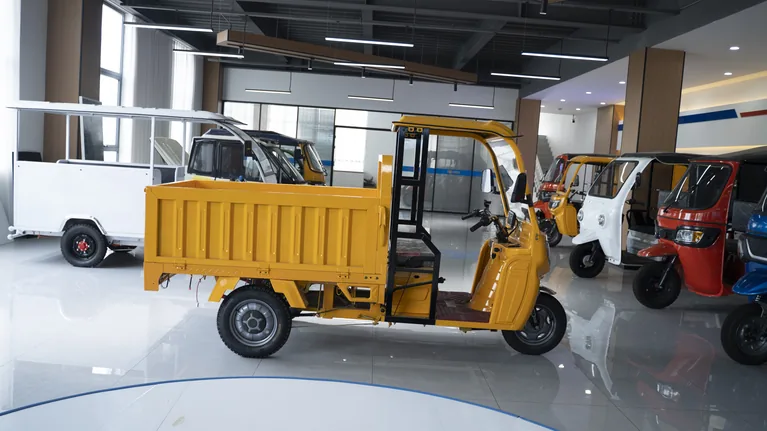
A Simple Canopy, an Open Bed and a Full Day of Useful Work
Some work vehicles earn their value by being available for everything. In the morning they carry tools. At noon they move feed, plants or cartons. In the afternoon they collect waste or make a local delivery. The 1.6M Simple-Canopy Electric Cargo Tricycle is built for this varied, practical day. Its…
Read More Technology
How Electric Three-Wheelers Improve Last-Mile Delivery Operations
Learn how electric three-wheelers support last-mile delivery through right-sized capacity, route efficiency and flexible cargo-body options.
Read More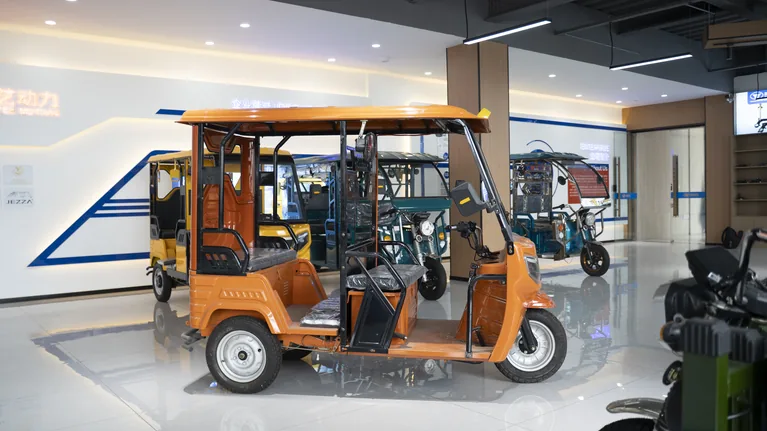 Company News
More Seats, More Possibilities: Life with a Foldable 6+1 Electric Tuk Tuk
Large families know that moving together is not always simple. Two motorcycles split everyone up, while a full-size van may be expensive and awkward for short local journeys. The Deluxe Foldable Double-Row Electric Tuk Tuk 6+1 offers a friendlier middle ground: room for up to seven people, including…
Read More