

Xinhuanhai News & Insights
In-depth articles, product stories and thought leadership from Xinhuanhai.
Why Electric Tuk Tuks Are Gaining Attention Across African Markets
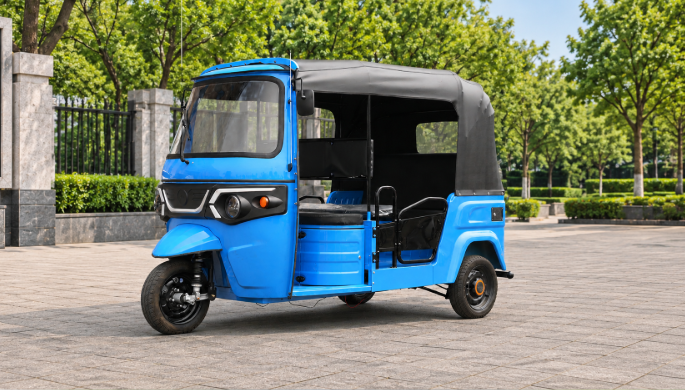
Across Africa, transportation needs vary significantly from large capital cities to smaller towns, tourism areas and rural communities. In many locations, short-distance passenger transport remains an essential part of everyday mobility, while small businesses also need affordable vehicles for moving goods between markets, shops and local customers.
Against this background, electric tuk tuks are receiving increasing attention as another option for short-distance mobility. Their compact dimensions, flexible passenger and cargo configurations and electric drivetrains can make them suitable for selected commercial applications. However, Africa is not one single market. Road conditions, electricity access, passenger habits, regulations and purchasing power differ widely between countries and even between cities. For importers and distributors, the opportunity lies in matching the right vehicle to the right local application.
1. Short Distance Mobility Creates Practical Use Cases for Electric Tuk Tuks
One reason electric tuk tuks are relevant to African markets is the importance of short and medium-distance transportation.
In cities and growing towns, many journeys do not require a full-size passenger vehicle. Residents may need transportation between neighborhoods, markets, transport hubs, workplaces and residential areas. A compact three-wheeler can provide useful passenger capacity while remaining easier to maneuver on narrower or more congested streets.
Different passenger layouts can also serve different operating models.
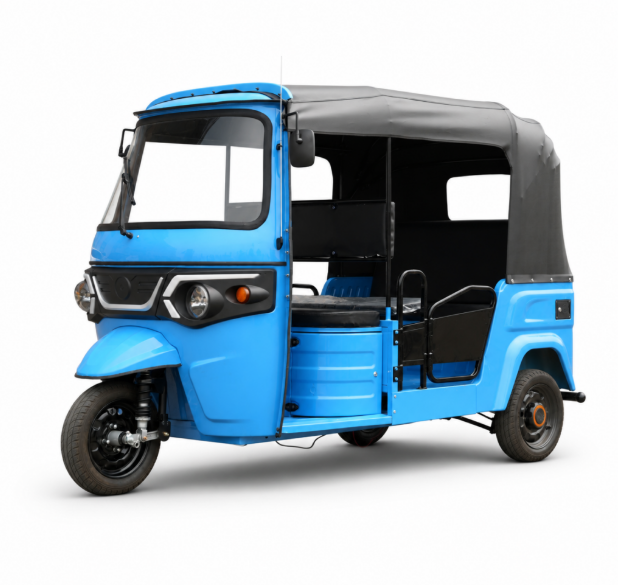
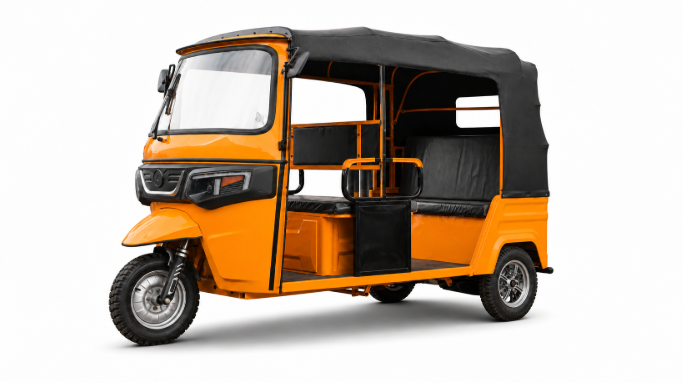
A 3+1 electric tuk tuk can be considered for smaller passenger services and neighborhood routes, while 6+1 configurations can provide additional seating for community shuttles, hotels, resorts, campuses and organized passenger transportation.
For commercial operators, vehicle utilization is particularly important. The economic value of an electric tuk tuk depends not simply on its purchase price but on how many productive trips it can complete, its charging requirements, maintenance needs and the number of passengers carried during normal operation.
This creates opportunities for distributors to segment the market rather than promote one vehicle to every customer.
A compact model might target independent passenger operators. Higher-capacity vehicles could serve shuttle applications, while cargo versions can be positioned for markets, farms and local delivery businesses.
The relatively compact footprint of an electric three-wheeler can also be useful in areas where road space and parking are limited.
However, buyers should study local transportation regulations carefully. Whether an electric tuk tuk can be registered or used for commercial passenger services depends on the rules of the destination country and municipality.
2. Operating Economics Are Becoming an Important Part of the Buying Decision
Commercial transportation is ultimately a business.
Drivers, fleet operators and distributors need to understand how much a vehicle costs to operate and how reliably it can complete its daily work. This is one reason electric mobility is attracting interest in markets where operators are looking for alternatives for short-distance transportation.
Electric tuk tuks replace a conventional combustion drivetrain with an electric motor, controller and battery system. This changes the operating-cost structure, but the actual economic advantage depends on local conditions.
Electricity prices, fuel prices, daily mileage, battery life, maintenance costs and vehicle utilization all influence the final calculation.
Importers should therefore avoid promoting electric tuk tuks simply as “cheaper transportation.” A more professional approach is to calculate the operating case for the intended route.
For example, a vehicle completing predictable passenger trips every day can be evaluated according to daily distance, electricity consumption, charging frequency and expected passenger revenue. A cargo tricycle serving a local market can be evaluated according to delivery distance, payload and number of trips.
Charging availability is especially important.
In areas with reliable electricity and centralized parking, overnight charging can provide a straightforward operating model. In locations where grid availability is less predictable, buyers need to consider charging schedules, battery capacity and alternative energy arrangements before deploying a fleet.
Battery configuration should therefore reflect local conditions rather than simply following the largest available specification.
The same principle applies to motor power. Relatively flat urban routes with moderate passenger loads may have different requirements from hilly areas or vehicles operating at higher loads.
For African distributors, understanding these differences can help create vehicle configurations that balance acquisition cost with practical daily performance.
3. Local Conditions Create Opportunities for Market Specific Vehicle Configurations
Perhaps the most important characteristic of the African electric tuk tuk opportunity is diversity.
A vehicle configured for Nairobi may not be the ideal specification for Lagos, Accra, Dar es Salaam or Addis Ababa. Road quality, gradients, rainfall, temperature, passenger expectations and charging conditions can all be different.
This makes localization important.
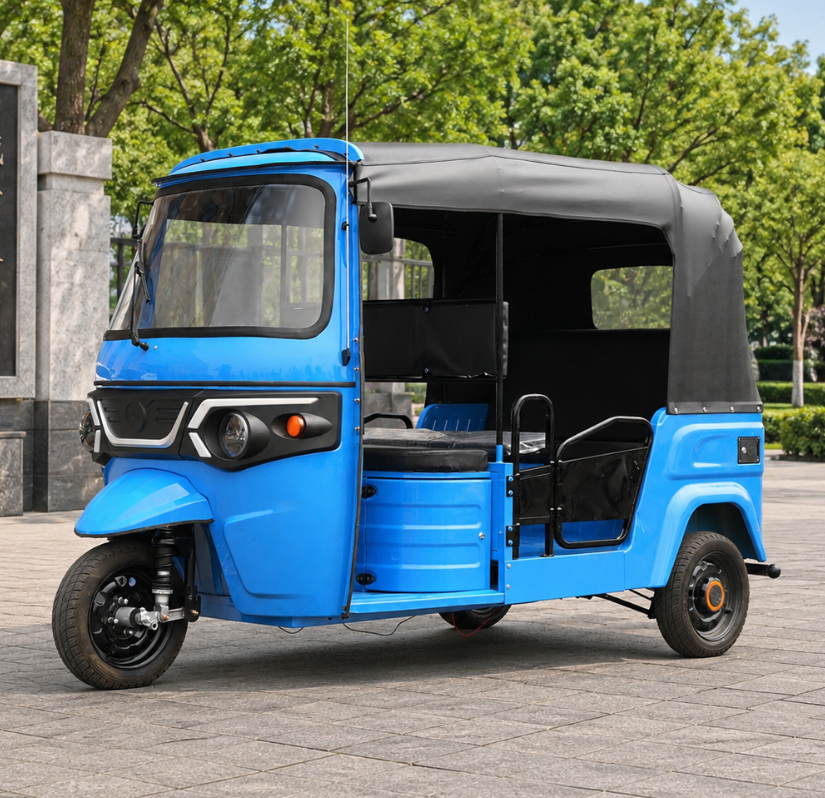
For markets with rougher secondary roads, buyers may prioritize ground clearance, suspension, tyre selection and durable chassis construction. In hilly locations, motor power and drivetrain configuration become more important. Hot climates require appropriate consideration of battery installation, electrical components and charging practices.
Passenger comfort can also influence the configuration.
Open or ventilated designs may be attractive in warm climates, while better weather protection may be required in regions with significant rainy seasons. Seat layout, canopy design, body color and interior materials can also be adapted according to the intended customer group.
Cargo electric tricycles create another potential market.
Small retailers, farms, workshops and local delivery businesses often need practical transportation without requiring a full-size truck or van. Open-bed and enclosed cargo configurations can therefore complement passenger tuk tuks within a distributor’s product portfolio.
For Chinese manufacturers and African distributors, this creates an opportunity to move beyond simply exporting a standard vehicle.
A stronger approach is to identify the intended application first, collect information about road conditions and customer budgets, and then configure the motor, battery, passenger layout, cargo body and other features accordingly.
After-sales planning should be part of this strategy from the beginning. Spare parts, technician training, maintenance information and battery replacement options can be particularly important when building a new electric vehicle category in a developing market.
Conclusion
Electric tuk tuks are gaining attention across African markets because they can address several practical transportation needs at the same time. Compact dimensions can support short-distance mobility, passenger and cargo configurations provide flexibility, and electric drivetrains create a different operating-cost model for commercial users.
However, the opportunity should not be viewed as one uniform African market. Kenya, Nigeria, Ghana, Tanzania, Ethiopia and other countries have different road conditions, regulations, customer expectations and charging environments.
For importers and distributors, the strongest opportunity is therefore not simply to import an electric tuk tuk, but to select and configure vehicles around real local operating conditions. Passenger capacity, motor power, battery configuration, suspension, road conditions and after-sales support should all be considered together.
As short-distance electric mobility continues to develop, suppliers that can combine suitable vehicle platforms with market-specific configurations will be better positioned to support distributors and commercial operators across Africa.
Related Articles
 Company News
How OEM Electric Tuk Tuk Customization Helps Distributors Enter Local Markets
Entering a new electric tuk tuk market involves more than finding a vehicle and importing it. Distributors need to understand who will buy the vehicle, how it will be used, what customers can afford and which features matter most under local operating conditions. A standard factory configuration may…
Read More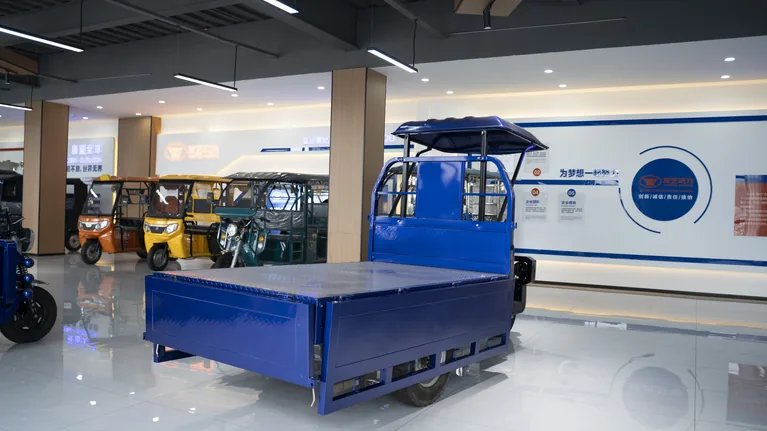 Company News
A Cargo Tricycle That Opens Up to the Way People Really Work
Discover how a four-side-opening 1.8M electric cargo tricycle makes loading easier for farms, markets, workshops and local delivery routes.
Read More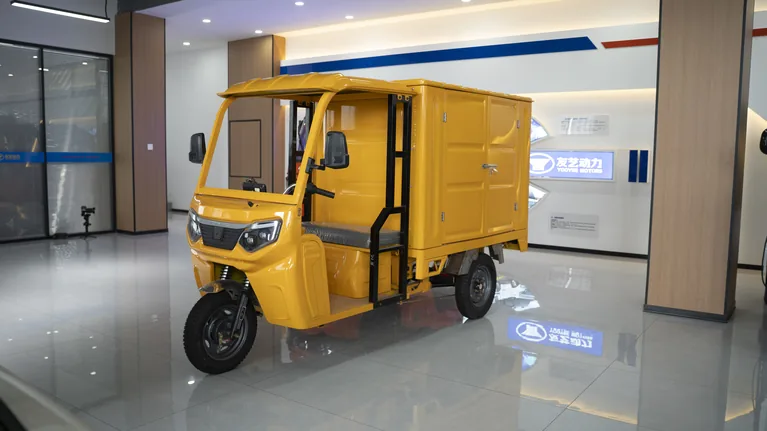 Company News
A Moving Storehouse for the Things Customers Are Waiting For
Learn how an enclosed-box electric cargo tricycle protects parcels and goods while supporting reliable last-mile delivery and mobile business branding.
Read More