
Xinhuanhai News & Insights
In-depth articles, product stories and thought leadership from Xinhuanhai.
How OEM Electric Tuk Tuk Customization Helps Distributors Enter Local Markets
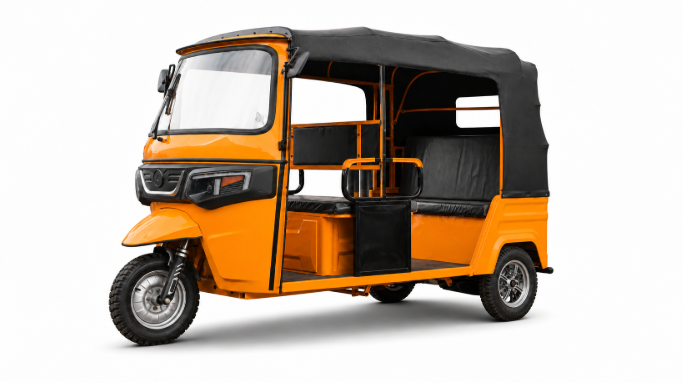
Entering a new electric tuk tuk market involves more than finding a vehicle and importing it. Distributors need to understand who will buy the vehicle, how it will be used, what customers can afford and which features matter most under local operating conditions. A standard factory configuration may provide a useful starting point, but it does not always match every market.
This is where OEM customization can create commercial value. Instead of changing features simply to make a vehicle look different, distributors can use customization to build configurations around local passenger needs, road conditions, operating patterns and price segments. When planned carefully, OEM electric tuk tuks can also help distributors develop their own market identity rather than competing only on the manufacturer’s standard product.
1. Adapt the Vehicle to Local Customers Instead of Selling One Global Specification
Electric tuk tuk markets can differ considerably between countries.
A distributor selling vehicles for short urban passenger transportation may require a different configuration from a company supplying resorts, tourist attractions or community shuttle services. Cargo operators have another set of requirements again.
OEM planning should therefore begin with the local use case.
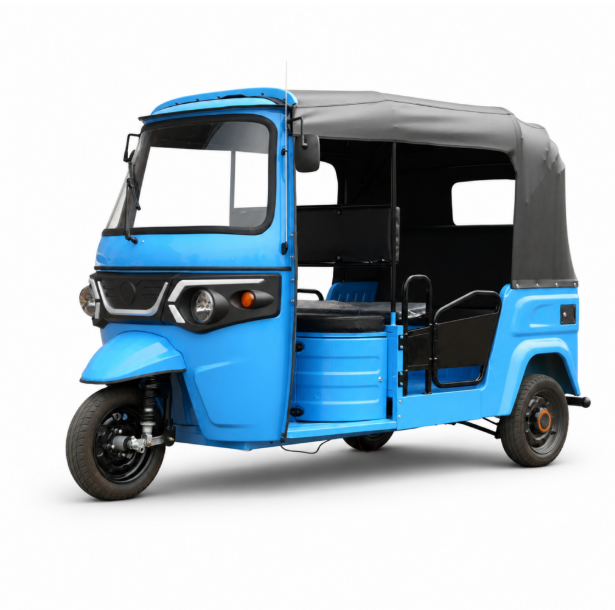
Passenger capacity is one example. A compact 3+1 model may suit independent operators and short-distance transportation, while a 6+1 vehicle can be positioned for shuttle services, communities or tourism applications.
Motor power can also be matched to local conditions. Relatively flat routes with moderate loads may not require the same drivetrain as markets with frequent gradients or heavier commercial operation.
Battery configuration should reflect daily mileage and charging availability. Buyers can consider the expected operating distance, charging time and local service environment before deciding on the most appropriate battery option.
Road conditions can influence other choices such as tyres, suspension and chassis configuration.
Customization can also address climate and passenger expectations. Seat materials, canopy arrangements and body designs may be selected differently for hot environments, rainy regions or applications where passenger comfort has a higher priority.
The purpose of OEM is therefore not to create the most complicated vehicle possible.
A good OEM specification removes features that the market does not need and strengthens the features that customers actually value.
For distributors, this can make the final product easier to position because the sales team can explain why a particular configuration was selected for local users rather than offering a generic imported vehicle.
2. Use OEM to Build a Local Brand and Create Clear Product Levels
OEM customization can also help distributors build brand recognition.
When several dealers sell visually similar electric three-wheelers, customers may find it difficult to distinguish one supplier from another. Consistent branding can help a distributor create a more recognizable local product range.
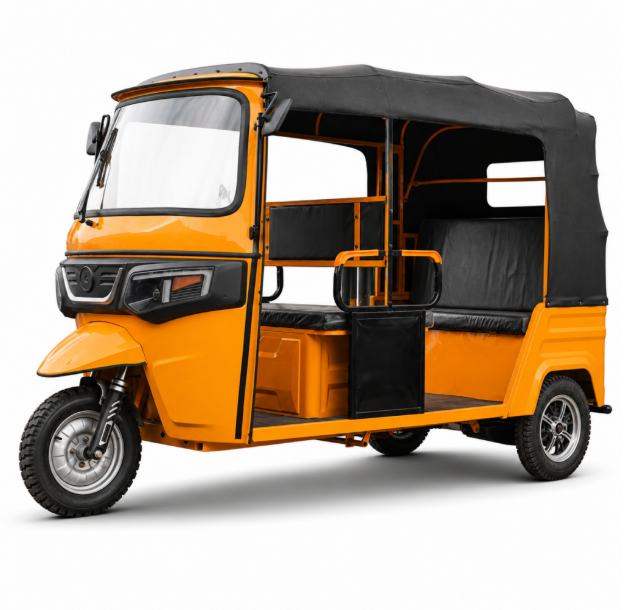
Customization may include body colors, logos, decals, seat materials and selected visual details. These elements can be coordinated across several models so that passenger and cargo vehicles belong to the same brand family.
However, branding should go beyond placing a logo on the vehicle.
Distributors can use OEM specifications to create clear product levels for different customer budgets.
For example, an entry-level passenger tuk tuk could focus on practical transportation and competitive acquisition cost. A mid-range version might offer upgraded battery capacity or selected comfort features. A higher-specification model could target tourism businesses, resorts or commercial operators that value additional performance and appearance.
This gives the distributor a more structured sales conversation.
Instead of offering one vehicle and negotiating only on price, the dealer can present several configurations designed for different customer groups.
The same strategy can be applied to cargo vehicles.
An open-bed electric cargo tricycle can target farms, markets and general goods transportation, while an enclosed-box model can serve delivery businesses that need better protection for parcels and retail products.
A carefully planned product family can therefore help the distributor cover several market segments without creating dozens of unrelated configurations.
Consistency is important. Colors, model naming, specification levels and marketing materials should follow a clear system so that customers can understand the difference between each vehicle.
Over time, this allows the distributor’s own brand to become more important than the identity of the original manufacturing source.
3. Start with Market Testing Before Developing a Large Customized Fleet
Customization creates opportunities, but too much customization at the beginning can also create risk.
A distributor entering a new market may not yet know which battery, motor, passenger layout or body design will generate the strongest demand. Creating many unique configurations before collecting real customer feedback can increase inventory complexity.
A more practical strategy is to customize in stages.
The first stage can use one or two proven vehicle platforms with limited changes such as branding, body color and market-appropriate technical configuration.
Sample vehicles or a small pilot fleet can then be used to gather feedback from drivers, passengers, fleet operators and technicians.
Distributors can observe which questions customers ask most frequently. They can also monitor daily mileage, passenger loads, charging behavior, road performance and maintenance requirements.
This information can guide the next OEM order.
For example, customers may request greater range but show little interest in higher maximum speed. Operators may prefer a particular seating layout. Local technicians may recommend standardizing certain electrical components across the fleet.
These insights allow the second production batch to become more market-specific without relying entirely on assumptions.
Spare-parts planning should develop at the same time.
If multiple OEM models share selected motors, controllers, chargers or service components, distributors can simplify local inventory and technician training. Excessive variation can have the opposite effect.
Buyers should therefore discuss component consistency with the manufacturer when planning a long-term OEM program.
OEM customization works best when it becomes an ongoing product-development process between the manufacturer and distributor. Market feedback from one batch can improve the next, gradually creating a vehicle range that is increasingly suited to local customers.
Conclusion
OEM electric tuk tuk customization can help distributors do much more than change vehicle colors or add a private-label logo. When used strategically, it allows the vehicle specification, appearance and product positioning to reflect the needs of a specific market.
Passenger capacity, motor power, battery configuration, road conditions, climate, customer budget and commercial application can all influence the final vehicle design.
At the same time, consistent branding and clearly defined product levels can help distributors move away from pure price competition and develop a recognizable local product portfolio.
The most effective approach is to start with a proven vehicle platform, customize the features that matter most and then improve future orders using real market feedback. In this way, OEM cooperation can become a practical tool for building a long-term electric tuk tuk distribution business rather than simply producing a different-looking vehicle.
Related Articles
 Tuk Tuk Technology
How to Evaluate Electric Tuk Tuk Demand in Kenya Before Importing
Kenya is an interesting market for electric mobility because of its growing interest in electric transportation, established motorcycle taxi services and demand for practical urban mobility solutions. However, these conditions do not automatically guarantee strong demand for electric tuk tuks in eve…
Read More Company News
Why Electric Tuk Tuks Are Gaining Attention Across African Markets
Across Africa, transportation needs vary significantly from large capital cities to smaller towns, tourism areas and rural communities. In many locations, short-distance passenger transport remains an essential part of everyday mobility, while small businesses also need affordable vehicles for movin…
Read More Company News
TRI-GLOBAL Launches New Tuk Tuk X Series with Upgraded Lithium Battery
Discover the Xinhuanhai Tuk Tuk X Series with an upgraded lithium battery system, reinforced chassis and flexible passenger configurations.
Read More