

TRI-GLOBAL News & Insights
In-depth articles, product stories and thought leadership from TRI-GLOBAL.
What Electric Tuk Tuk Buyers Should Know About Braking Systems
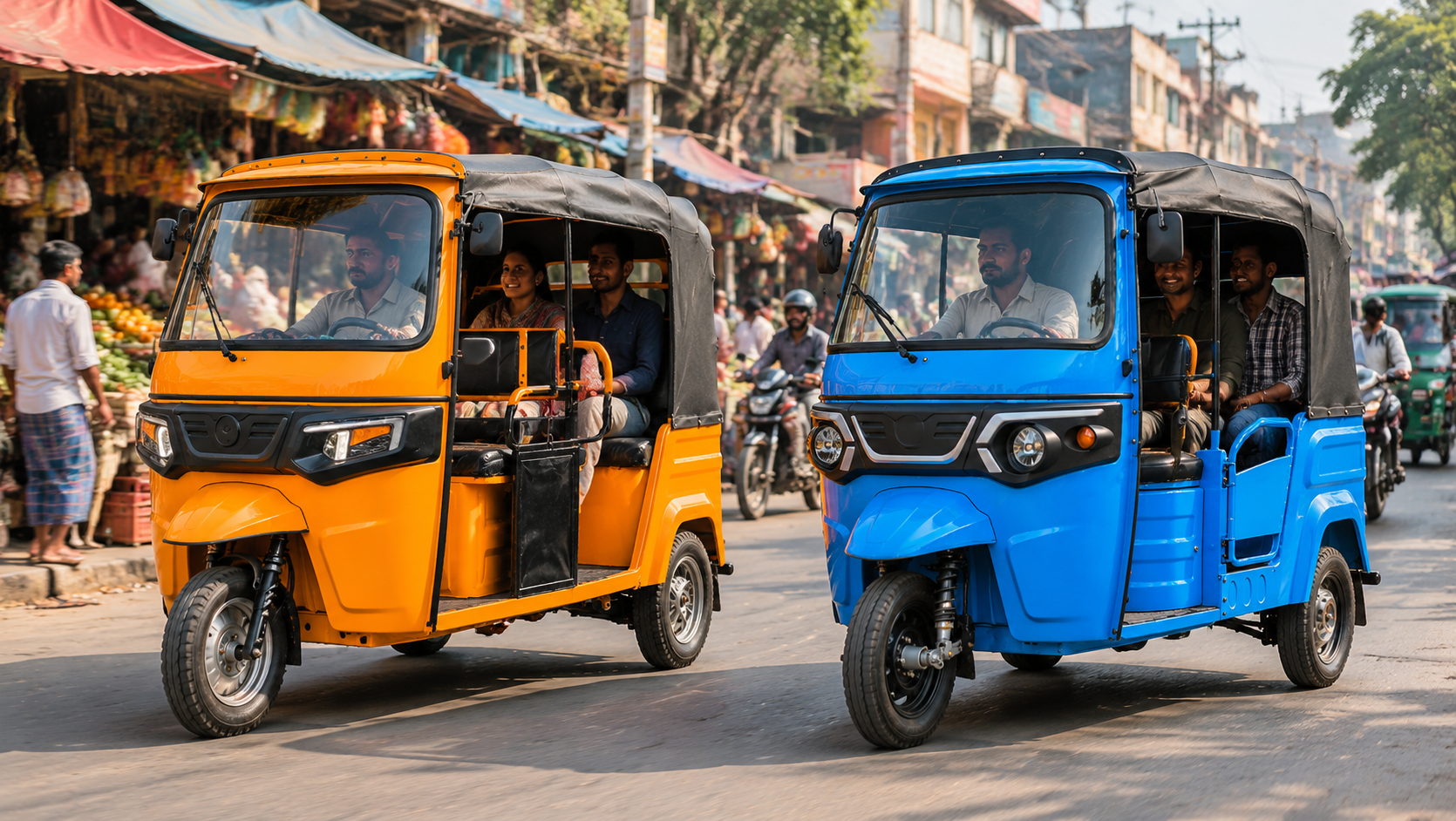
When purchasing electric tuk tuks for passenger transportation, braking performance is one of the most important technical considerations. Although buyers often focus on motor power, battery capacity, driving range and vehicle appearance, the braking system plays a direct role in vehicle control, passenger safety and daily operating reliability.
Commercial electric tuk tuks may carry several passengers, operate in congested streets and travel on roads with frequent stops, gradients or uneven surfaces. These operating conditions place different demands on the braking system. For international importers and distributors, understanding braking configurations and their practical differences is essential when comparing electric three-wheelers from China.
1. Understanding Mechanical Drum Brakes and Hydraulic Drum Brakes
Electric tuk tuks commonly use different braking configurations depending on vehicle design, performance requirements and intended applications.
Two configurations buyers may encounter are mechanical drum brakes and hydraulic drum brakes.
Mechanical drum brakes typically use cables or mechanical linkages to transmit braking force from the driver's control to the brake mechanism.
This design can provide a relatively straightforward mechanical arrangement, making it suitable for certain electric tricycle configurations where simplicity and practical servicing are important.
However, mechanical brake systems require correct adjustment and regular inspection. Cable condition, linkage movement and brake shoe wear can influence braking consistency.
Hydraulic drum brakes operate differently.
Instead of relying primarily on mechanical cables, hydraulic systems transmit braking force through pressurized brake fluid. This arrangement can provide more consistent force transmission and easier control distribution when properly designed and maintained.
However, hydraulic brakes also introduce additional maintenance considerations, including fluid condition, leakage inspection and hydraulic component integrity.
Neither braking system should be evaluated solely by its name.
Actual braking performance depends on brake dimensions, friction materials, mechanical condition, vehicle weight, tyre traction and the overall system design.
TRI-GLOBAL, the international electric vehicle brand operated through Shanghai Xinhuanhai International Trade Co., Ltd., offers passenger electric tuk tuks with different braking configurations.
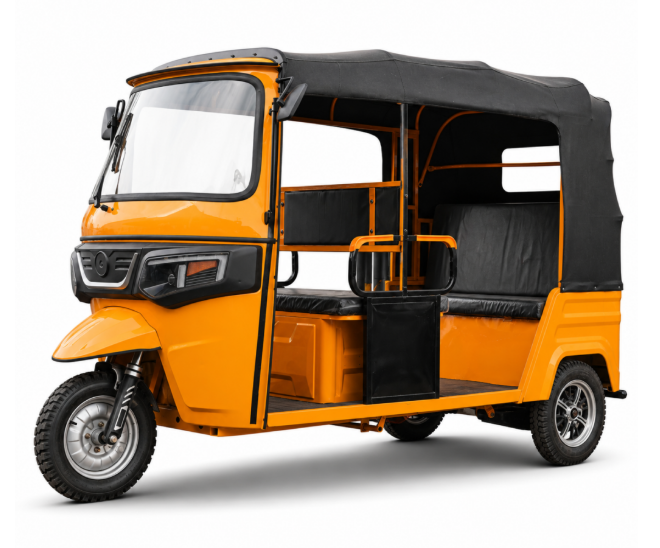
For example, its Standard Single-Row Electric Tuk Tuk 3+1 features a 2000W motor and mechanical drum brakes.
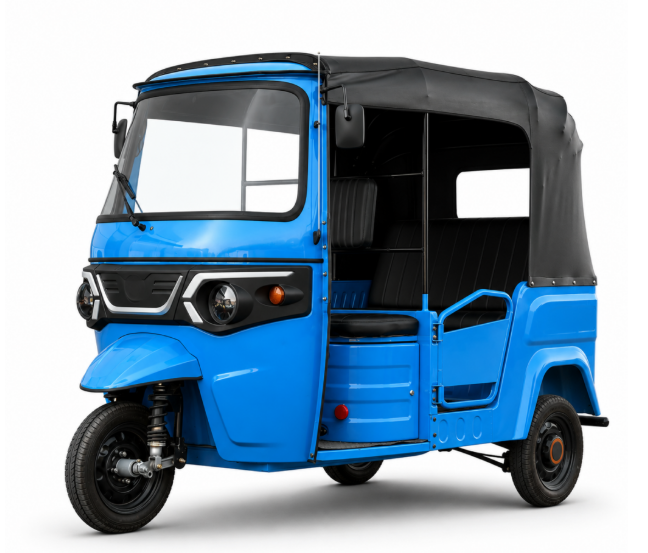
The Deluxe Single-Row Electric Tuk Tuk 3+1 uses a 4000W motor and hydraulic drum braking system.
These two models demonstrate why importers should compare braking specifications alongside vehicle performance requirements rather than assuming all electric tuk tuks use identical components.
For commercial buyers, the best braking configuration is the one that meets the vehicle's operating demands, applicable safety requirements and local maintenance capabilities.
2. How Passenger Load Road Conditions and Vehicle Speed Affect Braking Requirements
Braking requirements change significantly according to the way an electric tuk tuk is operated.
Passenger capacity is one important factor.
A compact 3+1 passenger vehicle may experience different braking demands from a larger 6+1 model carrying several passengers during daily commercial service.
As total vehicle weight increases, more kinetic energy must be dissipated during braking at the same speed.
This makes load conditions an important part of braking-system evaluation.
Vehicle speed also influences stopping requirements. Higher operating speeds increase the energy that the brakes must manage, making braking performance particularly important for vehicles used on faster commercial routes.
Road gradients create additional challenges.
When an electric tuk tuk travels downhill, the braking system may need to control vehicle speed for extended periods. Repeated braking can increase brake temperature and potentially affect performance if the system is not designed for the expected operating conditions.
For distributors serving hilly regions in Africa, Latin America or Southeast Asia, braking performance under realistic passenger loads deserves careful consideration.
Road surfaces also influence stopping behavior.
Wet roads, gravel, loose surfaces and uneven pavement can reduce available tyre traction. Even a properly functioning braking system cannot compensate for insufficient grip between the tyres and the road.
This means braking performance must be evaluated together with tyres, suspension, vehicle stability and intended operating speed.
TRI-GLOBAL's Deluxe Forward-Facing Double-Row Electric Tuk Tuk 6+1 features a 4000W motor, hydraulic drum brakes and a manufacturer-stated payload capacity of at least 600 kg.
This configuration illustrates the importance of evaluating braking requirements on larger passenger vehicles.
However, a hydraulic braking system alone does not prove that a vehicle will achieve a particular stopping distance.
Buyers should request appropriate braking performance information and confirm that the final vehicle configuration meets the applicable requirements of the destination market.
3. What Buyers Should Inspect Before Purchasing Electric Tuk Tuks
For international importers, selecting a suitable braking system involves more than reviewing a technical specification sheet.
Before placing an order, buyers should confirm the exact braking configuration installed on the selected model.
Important details include brake type, front and rear braking arrangements, operating mechanism, parking brake design and the availability of compatible replacement parts.
Buyers should also investigate how the braking system performs under the expected operating conditions.
For passenger transportation, testing should consider realistic vehicle loads, intended speeds and representative road surfaces.
Where appropriate, brake evaluation may include controlled stopping tests, parking brake effectiveness, repeated braking performance and inspection for abnormal noise or uneven operation.
Testing should follow applicable standards and be conducted by qualified personnel under safe conditions.
Maintenance requirements are another purchasing consideration.
Mechanical drum brakes may require cable inspection and adjustment, while hydraulic braking systems require attention to brake fluid, seals, lines and potential leakage.
Distributors should ensure that local technicians understand the selected system and have access to compatible replacement components.
Shanghai Xinhuanhai International Trade Co., Ltd., through its TRI-GLOBAL brand and manufacturing cooperation with Xuzhou Youyi Power Equipment Co., Ltd., connects overseas buyers with different passenger electric tricycle configurations and technical support resources.
For international distributors, this provides an opportunity to discuss braking specifications, vehicle configurations and maintenance requirements before confirming an order.
The company also promotes spare-parts supply and technical communication services, which can assist overseas partners in preparing local after-sales arrangements.
However, buyers should confirm the exact replacement parts, documentation and inspection requirements applicable to their selected vehicle models.
Before bulk purchasing, importers may benefit from evaluating a sample vehicle under controlled and representative operating conditions.
This approach can help identify whether the braking system provides appropriate performance for the intended application while allowing local technicians to become familiar with inspection and maintenance procedures.
For commercial transportation businesses, reliable braking is not simply an optional feature. It is a fundamental requirement that should be considered throughout vehicle selection, inspection and long-term operation.
Conclusion
Understanding electric tuk tuk braking systems is essential for importers, distributors and commercial fleet operators.
Mechanical drum brakes and hydraulic drum brakes offer different operating and maintenance characteristics, but actual safety performance depends on the complete vehicle design and its intended operating conditions.
Passenger capacity, vehicle weight, speed, road gradients, tyre traction and maintenance capability should all influence the purchasing decision.
With different passenger electric tuk tuk configurations available through TRI-GLOBAL, overseas buyers can compare braking specifications and discuss suitable vehicle options for their markets.
Ultimately, the best electric tuk tuk braking system is not determined by whether it is mechanical or hydraulic alone. It is the system that provides verified braking performance, meets applicable safety requirements and remains practical to maintain throughout daily commercial operation.
Related Articles
 Company News
More Seats, More Possibilities: Life with a Foldable 6+1 Electric Tuk Tuk
See how a foldable 6+1 electric tuk tuk gives large families, resorts and community operators flexible seating for everyday group transport.
Read More Company News
Understanding Payback: A Practical Business Case for Electric Tuk Tuk Buyers
Build a realistic electric tuk tuk payback calculation using purchase cost, energy, maintenance, utilization, revenue and battery replacement assumptions.
Read More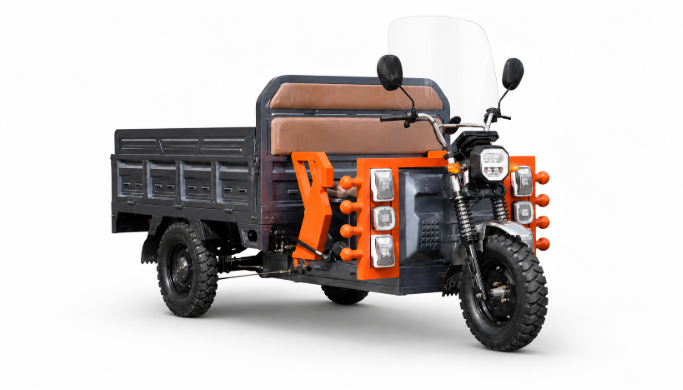 Company News
Passenger vs Cargo Electric Tuk Tuks and Which Model Fits Your Business
Electric tuk tuks are not limited to one type of transportation business. Passenger models can serve short-distance mobility, community transport, tourism and shuttle applications, while cargo electric three-wheelers can support delivery, retail, agriculture and local commercial transportation. For …
Read More