

TRI-GLOBAL News & Insights
In-depth articles, product stories and thought leadership from TRI-GLOBAL.
What Makes a Reliable Electric Tuk Tuk Chassis for Daily Commercial Use
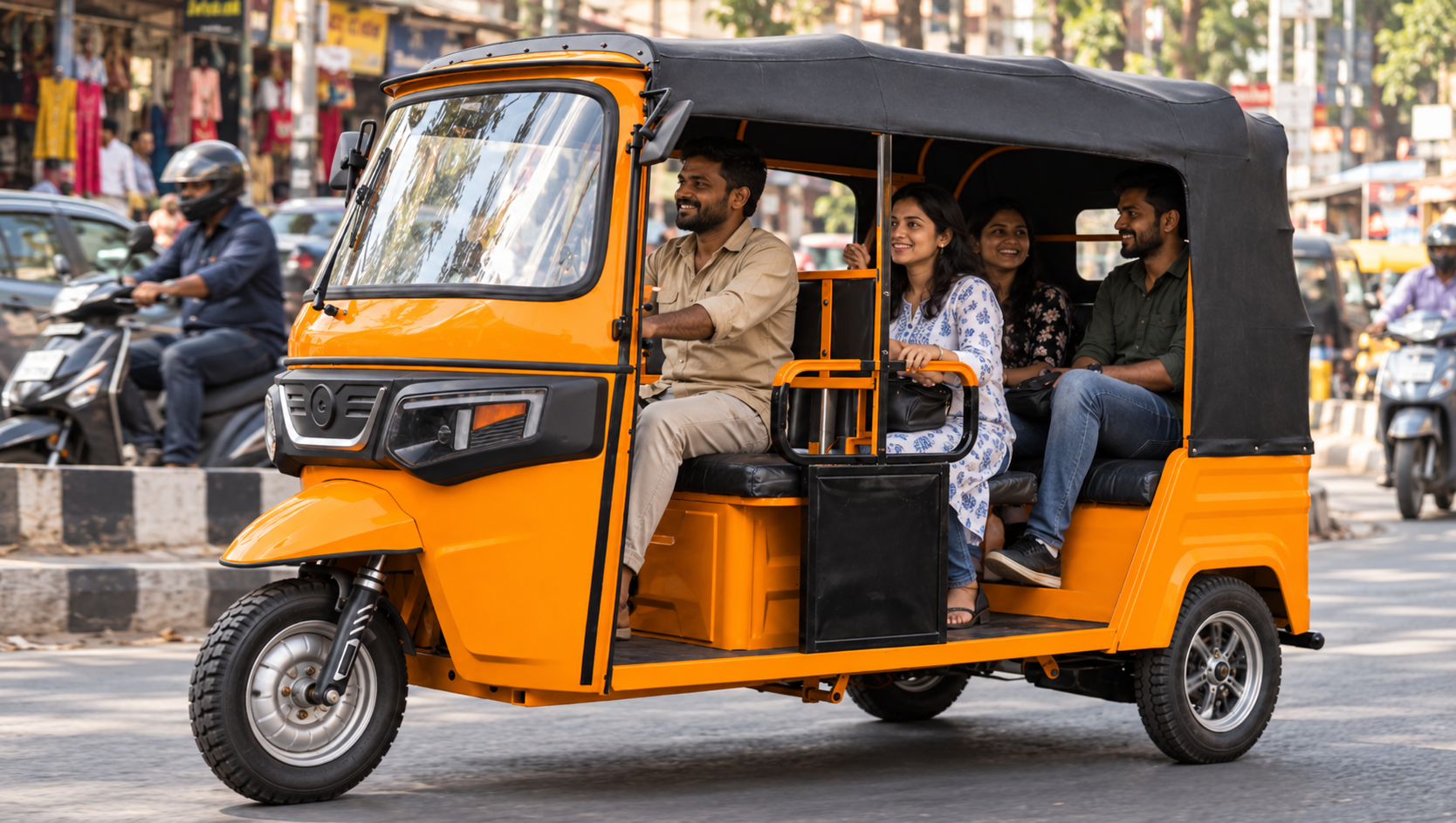
For commercial electric tuk tuks, the chassis is one of the most important structural components affecting long-term vehicle reliability. While buyers often focus on motor power, battery capacity and driving range, the chassis determines how effectively the vehicle supports passenger loads, absorbs road impacts and maintains structural integrity during repeated daily operation.
A passenger electric tuk tuk operating as a taxi may carry customers throughout the day, frequently accelerate and brake, and travel across uneven urban roads. These conditions place repeated stress on the frame, suspension mounting points and other structural connections. For importers and distributors, understanding chassis design and manufacturing quality is essential when evaluating electric three-wheelers for commercial transportation.
1. Frame Structure Material Selection and Welding Quality Determine Long Term Strength
A reliable electric tuk tuk chassis begins with an appropriate structural design.
The frame must support the vehicle body, battery system, motor, passengers and other components while maintaining sufficient rigidity under normal operating conditions.
For commercial applications, chassis strength should be evaluated according to the vehicle's intended payload and operating environment rather than appearance alone.
Steel structures are commonly used in electric three-wheeler frames because they can provide a practical combination of strength, manufacturability and cost. However, the reliability of a steel chassis depends on material specifications, structural geometry, joint design and manufacturing consistency.
Frame members must be positioned to distribute forces through the vehicle structure. Areas around suspension connections, steering mounts, battery supports and rear axle attachments require particular attention because they experience concentrated loads.
Welding quality is equally important.
Poorly executed welds may contain defects such as incomplete fusion, undercutting or inconsistent penetration. These defects can reduce joint strength and increase the risk of fatigue damage during repeated operation.
For this reason, buyers should not judge welding quality only by whether a weld looks smooth.
A professional chassis evaluation may include dimensional inspection, weld examination and suitable structural testing according to the intended application.
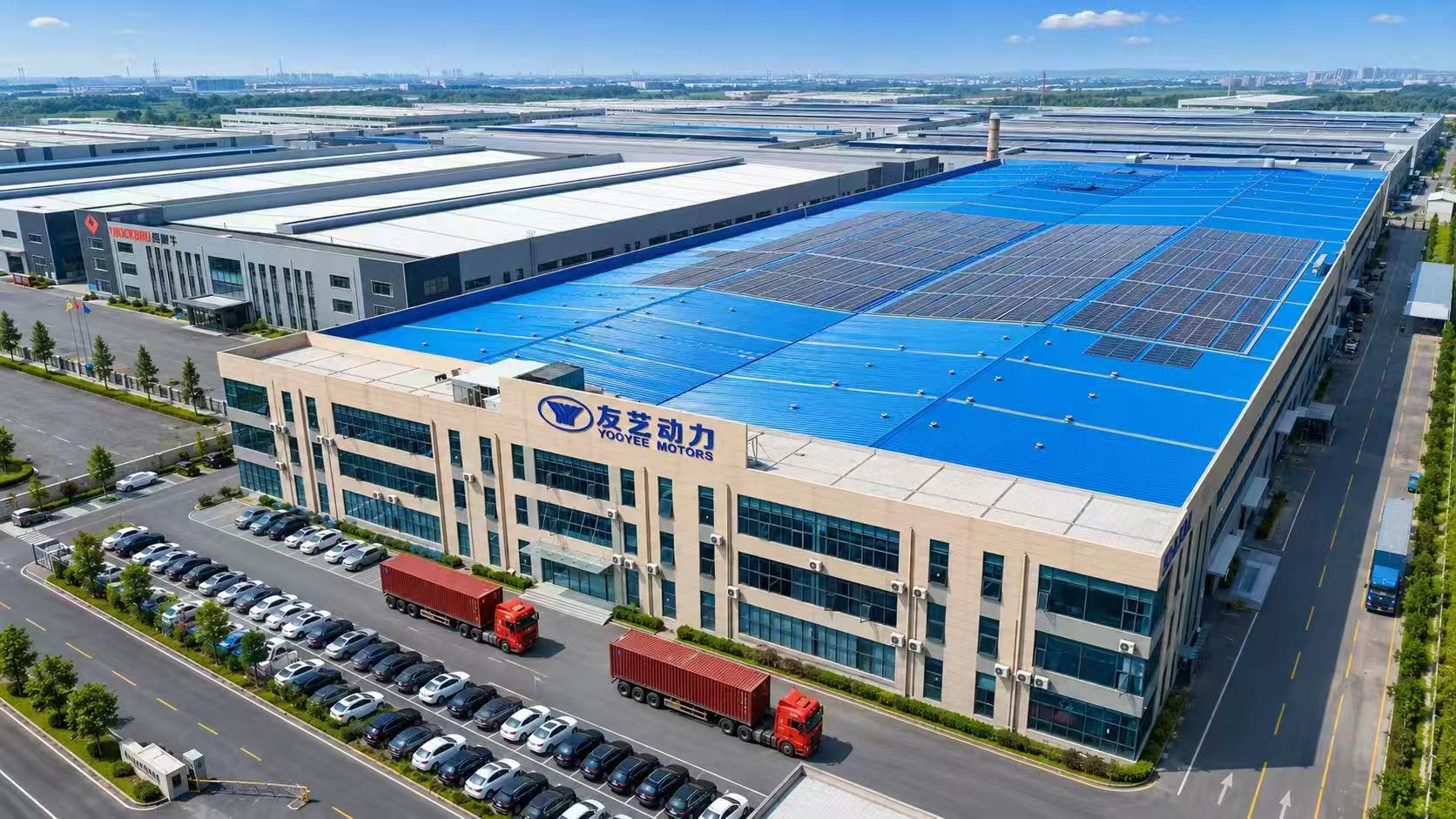
TRI-GLOBAL, the international electric vehicle brand operated through Shanghai Xinhuanhai International Trade Co., Ltd., works with Xuzhou Youyi Power Equipment Co., Ltd. for vehicle manufacturing and engineering support.
Through this manufacturing cooperation structure, the company provides passenger and cargo electric tricycles for overseas markets.
For international buyers, discussing chassis specifications with the supplier before production can help clarify vehicle load requirements, frame construction and inspection expectations.
Surface protection is another important consideration.
Commercial electric tuk tuks may operate in humid coastal areas, rainy environments or locations where dust and road debris regularly contact the vehicle underside.
Appropriate surface preparation, coating coverage and corrosion protection can help preserve chassis condition during long-term use.
Importers should therefore evaluate both structural design and manufacturing quality when comparing electric tuk tuk suppliers.
2. Load Distribution Suspension Mounting and Road Conditions Affect Chassis Durability
A chassis must perform reliably as part of the complete vehicle rather than as an isolated metal structure.
Passenger distribution, battery placement, suspension geometry and axle configuration all influence how forces are transferred through the frame.
For example, a compact 3+1 electric tuk tuk and a larger 6+1 passenger model have different seating arrangements and potential load distributions.
These differences can affect the stresses experienced by the chassis during acceleration, braking, cornering and travel over uneven surfaces.
Battery positioning also matters because battery packs can represent a significant portion of vehicle weight.
A properly designed battery mounting system should secure the battery and account for the structural and dynamic loads associated with normal vehicle operation.
Suspension mounting points deserve particular attention.
When a wheel encounters a pothole or speed bump, impact forces are transmitted through the suspension into the chassis. Repeated loading can place stress on brackets, welded joints and mounting fasteners.
For commercial vehicles operating on uneven roads, the strength and condition of these connections are especially important.
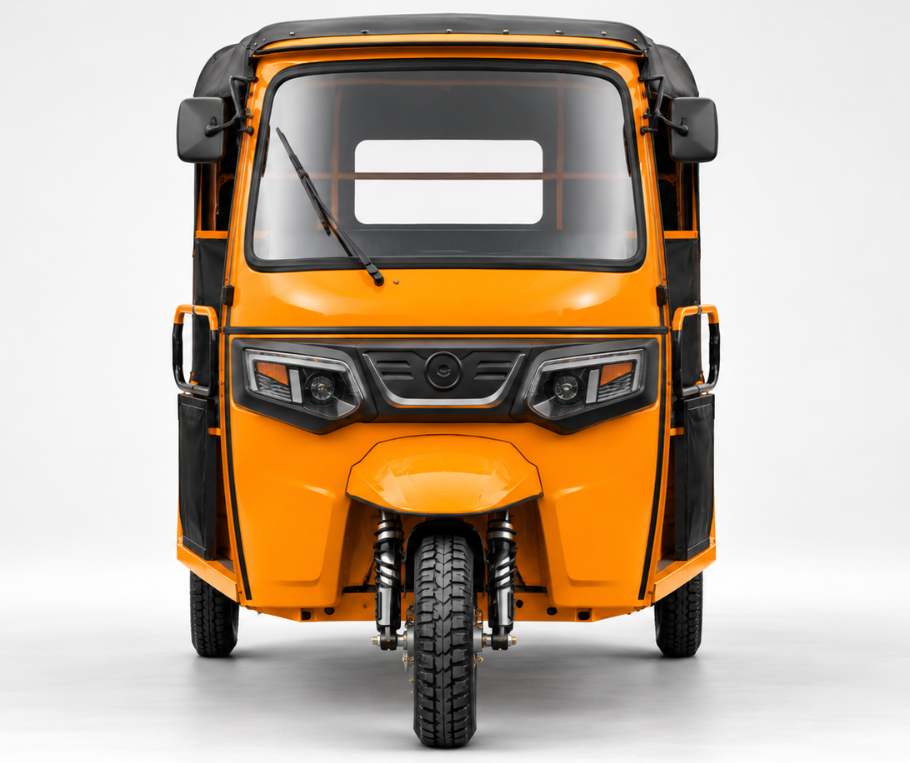
TRI-GLOBAL's Deluxe Single-Row Electric Tuk Tuk 3+1 features a 4000W motor, hydraulic drum brakes and independent front and rear suspension.
Its Standard Single-Row Electric Tuk Tuk 3+1 provides a 2000W configuration with a different suspension arrangement.
These models illustrate why buyers should examine the complete chassis and suspension configuration instead of assuming that all passenger electric tuk tuks share the same structural design.
However, a stronger-looking frame does not automatically guarantee greater durability.
Excessive structural weight can increase energy consumption and reduce available payload, while insufficient rigidity or poorly designed connections can affect handling and fatigue resistance.
The objective is to achieve an appropriate balance between structural strength, vehicle weight, suspension performance and operating requirements.
For distributors serving African, Latin American or Southeast Asian markets, providing the manufacturer with information about typical road surfaces, gradients and passenger loads can help establish more realistic chassis requirements.
3. Verify Chassis Reliability Through Inspection Testing and Maintenance Planning
For importers, chassis reliability should be supported by evidence rather than general marketing claims.
Before confirming a large commercial order, buyers can request information about frame materials, manufacturing procedures, inspection methods and applicable structural testing.
A sample vehicle can also be examined to identify potential concerns involving weld quality, component mounting, dimensional consistency and corrosion protection.
Inspection should focus on areas exposed to repeated mechanical stress.
These may include steering-column connections, suspension brackets, rear axle mounting points, battery supports and passenger-body attachment locations.
Buyers should confirm that the vehicle meets its agreed payload specification and that the chassis is suitable for the intended application.
Where appropriate, engineering validation may include static load testing, fatigue evaluation or representative road testing. The required methods and acceptance criteria should be agreed with the manufacturer and qualified testing personnel.
Shanghai Xinhuanhai International Trade Co., Ltd., through its TRI-GLOBAL brand and manufacturing network, coordinates overseas customer requirements with production and quality-control resources.
Its published manufacturing information discusses incoming material checks, structural component compatibility and attention to frame-related inspection during assembly.
For international distributors, this provides a basis for discussing chassis requirements, sample approval and inspection expectations before production begins.
After delivery, maintenance remains important.
Fleet operators should inspect accessible frame areas for cracks, deformation, corrosion and loose mounting hardware according to the manufacturer's maintenance instructions.
Vehicles that have experienced collisions, severe impacts or suspected overloading may require additional structural inspection before returning to service.
Any structural repair should be evaluated and performed by appropriately qualified personnel using approved procedures.
Distributors can also improve long-term quality monitoring by recording chassis-related service issues and identifying recurring problems across vehicles or production batches.
This information can support communication with the manufacturer and help improve future purchasing specifications.
For commercial buyers, reliable chassis performance is therefore the result of suitable engineering, controlled manufacturing, appropriate testing and responsible maintenance throughout the vehicle's working life.
Conclusion
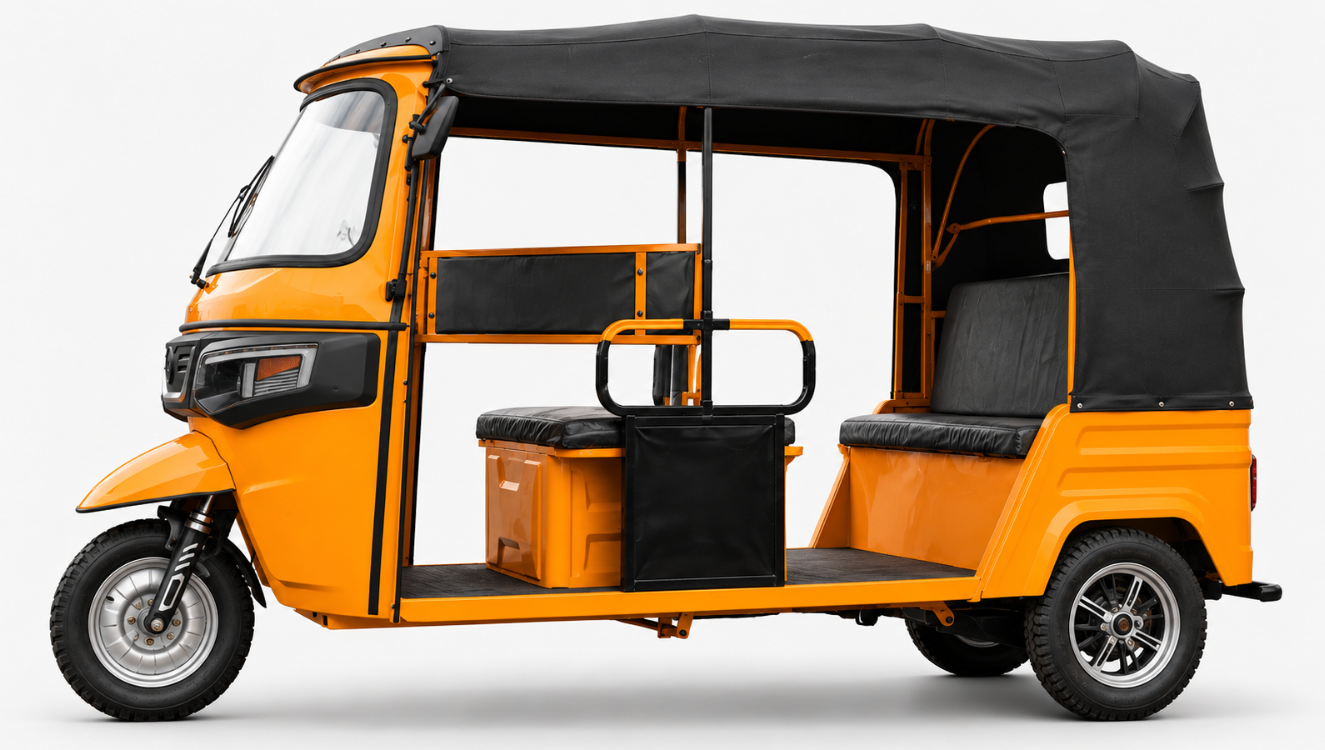
A reliable electric tuk tuk chassis is not defined simply by thick steel members or a heavy frame.
Long-term durability depends on structural design, material quality, welding consistency, load distribution, suspension mounting strength, corrosion protection and the suitability of the complete vehicle for its operating environment.
For importers and commercial fleet operators, chassis evaluation should include both technical documentation and practical inspection. Road conditions, passenger loads and expected daily utilization should be considered before selecting a vehicle.
Through its passenger electric tuk tuk range and manufacturing cooperation with Xuzhou Youyi Power, TRI-GLOBAL provides overseas buyers with different vehicle configurations and a channel for discussing technical and quality requirements.
Ultimately, choosing an electric tuk tuk with a properly engineered and verified chassis can help support vehicle reliability, passenger safety and more consistent commercial operation.
Related Articles
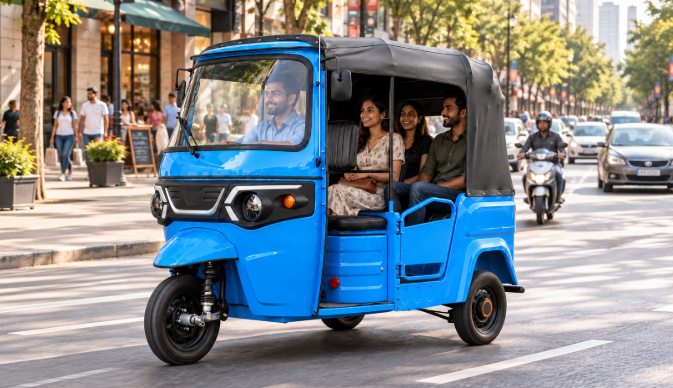 Company News
Electric Tuk Tuk Price Guide and the Key Factors That Affect Cost
When overseas buyers search for an electric tuk tuk, price is often one of the first questions they ask. However, there is rarely one standard price that applies to every electric three-wheeler. Two vehicles that look similar in photos can have significantly different costs because of differences in…
Read More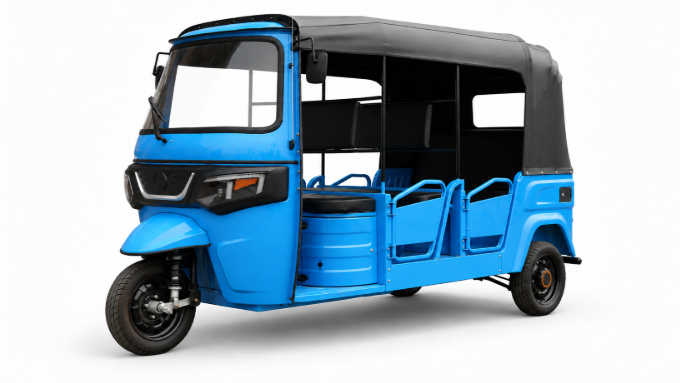 Company News
Why Electric Tuk Tuks Can Improve the Economics of Last-Mile Delivery
See how electric tuk tuks can support lower energy use, easier parking and productive short routes in last-mile delivery operations.
Read More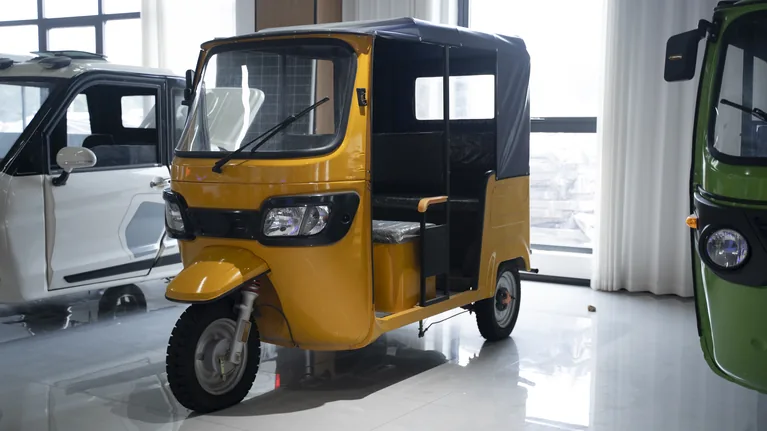 Company News
The L3 Deluxe: A Friendly Vehicle for Streets That Know Every Neighbor
Meet the L3 Deluxe electric tuk tuk, a compact passenger vehicle designed for narrow streets, villages, neighborhoods and everyday community travel.
Read More