


Xinhuanhai News & Insights
In-depth articles, product stories and thought leadership from Xinhuanhai.
Lithium vs Lead Acid Batteries for Electric Tuk Tuks
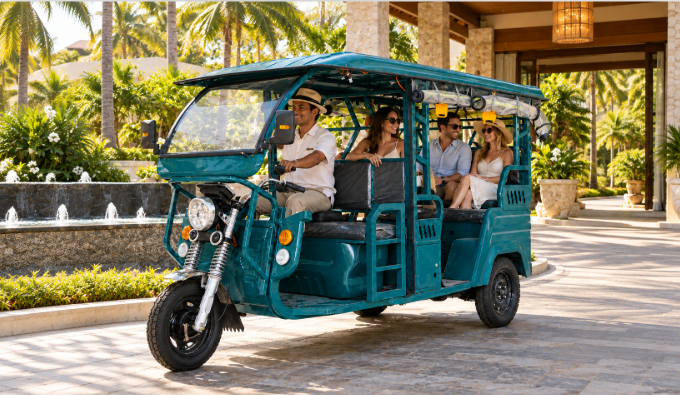
Battery selection for an electric tuk tuk should begin with the way the vehicle will actually work. Importers often focus on battery chemistry or ask for the largest available capacity, but neither approach automatically produces the best commercial vehicle. A passenger tuk tuk operating 40 kilometers per day on flat urban roads has very different energy requirements from a heavily loaded vehicle completing long shifts on hilly routes.
For distributors and fleet operators, the objective is to match battery capacity and charging strategy to the real duty cycle. Daily distance, passenger load, road gradients, temperature, operating hours and charging availability all affect energy consumption. Understanding these conditions before confirming the vehicle specification can reduce unnecessary purchasing cost while providing sufficient range for reliable daily operation.
1. Calculate Battery Requirements Around the Real Daily Route
The first question should be how the electric tuk tuk will be used during a normal working day.
Consider a passenger vehicle providing short-distance community transportation. It may travel relatively short routes, return frequently to the same operating area and have access to overnight charging. Its battery requirements can be very different from those of a commercial taxi that operates continuously throughout the day.
Importers should therefore estimate normal daily mileage as well as the maximum expected distance on busy days.
However, distance alone is not enough.
Passenger load has a direct effect on energy consumption. A 3+1 electric tuk tuk carrying two passengers most of the time will operate differently from a 6+1 vehicle regularly working near its passenger capacity. Additional vehicle weight requires more energy during acceleration and can increase consumption on gradients.
Road conditions also matter. Frequent stops, repeated acceleration, hills and uneven surfaces can increase energy demand compared with steady driving on flat paved roads.
For this reason, buyers should provide the manufacturer with a realistic operating profile that includes:
- Normal daily distance
- Maximum daily distance
- Typical passenger load
- Maximum passenger load
- Average operating speed
- Number of working hours
- Road gradients
- Frequency of stops
- Available charging periods
Battery selection can then be based on actual use rather than an advertised maximum-range figure.
A practical fleet should also have a reasonable operating reserve. Designing a route around the absolute theoretical maximum range can create problems when traffic, passenger loads, temperature or route conditions change.
2. Climate Road Conditions and Charging Infrastructure Change Battery Performance
Electric tuk tuks are increasingly used across Africa, Latin America, Southeast Asia and other emerging mobility markets. These regions can present very different operating environments.
High ambient temperatures, for example, deserve attention when specifying batteries and electrical systems. Vehicles operating for long hours in hot climates require appropriate battery installation, electrical protection and charging practices.
Road conditions can create another challenge.
In some markets, an electric tuk tuk may operate on paved urban roads during one part of the route and rough secondary roads during another. Greater rolling resistance, repeated acceleration and heavier operating loads can increase energy consumption.
Hilly markets require particularly careful planning. Importers should not evaluate the battery separately from the motor, controller, vehicle weight and drivetrain. A vehicle regularly climbing gradients with passengers may consume significantly more energy than the same model operating on flat streets.
Charging infrastructure is equally important.
Some fleets have centralized depots where every vehicle can be charged overnight. Others rely on drivers charging vehicles at home or at small local facilities. In areas where grid availability is less predictable, charging opportunities may be limited.
Buyers should therefore confirm local grid voltage, charger compatibility and the amount of time available between operating shifts.
For vehicles working one predictable shift each day, overnight charging may provide a straightforward operating model. Vehicles used intensively for passenger transportation or delivery may require a different battery capacity or charging strategy to minimize downtime.
The correct battery configuration should therefore be developed as part of the complete vehicle system rather than selected independently.
3. Choose Battery Capacity Based on Commercial Value Rather Than Maximum Range
More battery capacity is not always better.
A larger battery can increase available driving range, but it also affects vehicle cost and weight. For an importer serving a price-sensitive market, paying for capacity that customers rarely use may make the vehicle unnecessarily expensive.
The better approach is to determine how much range the customer genuinely needs and then provide a suitable reserve.
Consider three different operating scenarios.
A community shuttle running predictable short routes may prioritize affordability, simple charging and sufficient range for one daily shift.
A passenger taxi operating throughout the day may place greater value on usable energy, vehicle availability and the ability to complete more trips between charging periods.
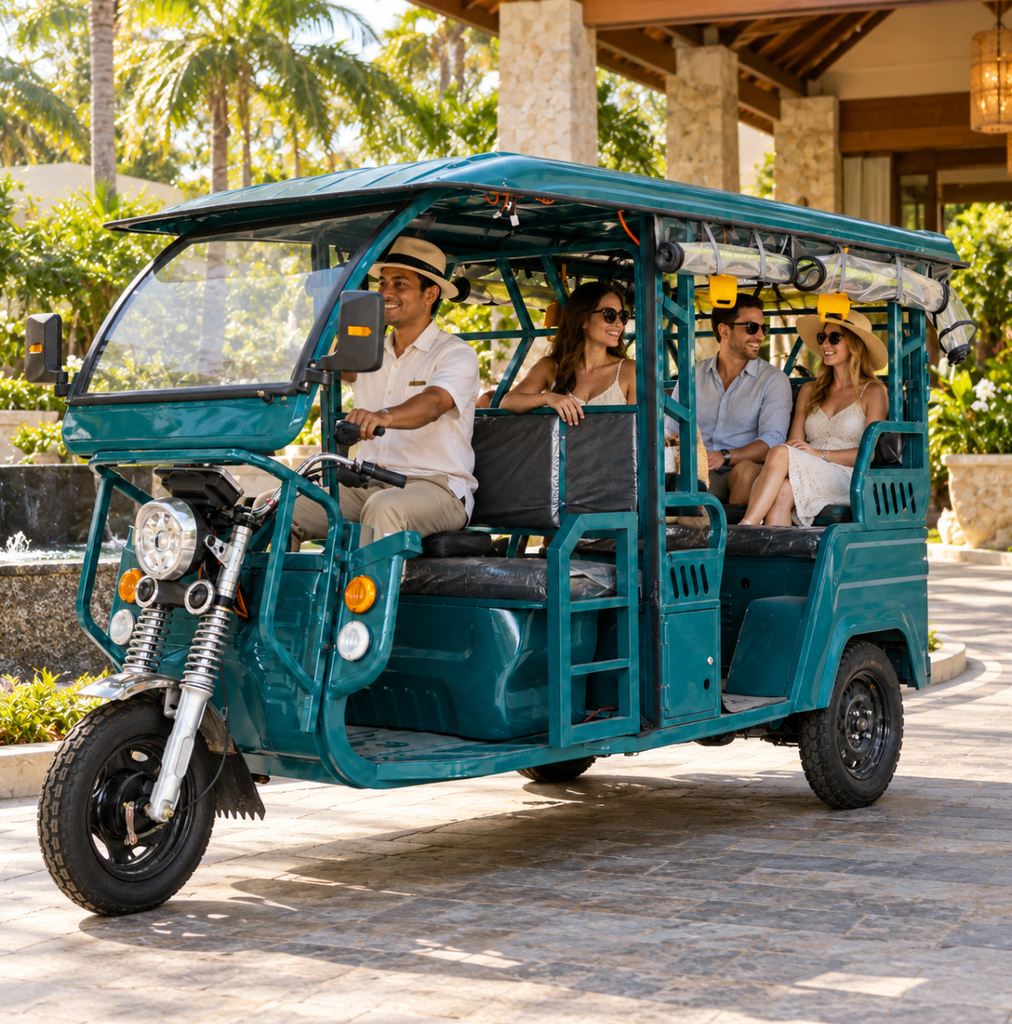
A resort or tourism vehicle may travel fewer kilometers but carry multiple passengers and require quiet, comfortable and reliable operation.
Each scenario creates a different battery requirement even when the vehicles appear similar.
Distributors should also consider long-term support. Battery replacement availability, charger compatibility, electrical connectors and technical documentation should be confirmed before vehicles enter the market.
This becomes especially important when selling multiple vehicle configurations. Standardizing selected battery and charger specifications across part of the product range can simplify spare-parts inventory and technician training.
Battery performance should also be monitored after vehicles enter service. Fleet operators can record daily distance, charging frequency and remaining range to determine whether the original configuration matches real operating conditions.
This information becomes valuable when placing future orders because the next batch can be configured using actual local operating data rather than assumptions.
For distributors entering a new market, a sample vehicle or small pilot fleet can therefore be useful before committing to a large order.

Conclusion
The right electric tuk tuk battery is not simply the battery with the highest capacity or the longest advertised range. It is the configuration that matches the vehicle’s real daily workload.
Daily mileage, passenger load, road gradients, climate, operating hours and charging availability should all be evaluated before the battery specification is finalized. A short-route community vehicle, a high-utilization passenger taxi and a resort shuttle may require different energy strategies even when they belong to the same electric tuk tuk category.
For importers and distributors, defining the operating profile first makes battery selection more practical. Matching battery capacity to actual market conditions can help control vehicle cost, maintain reliable daily range and create a more sustainable electric tuk tuk fleet for long-term commercial operation.
Related Articles
 Company News
What Makes a Reliable Electric Tuk Tuk Chassis for Daily Commercial Use
For commercial electric tuk tuks, the chassis is one of the most important structural components affecting long-term vehicle reliability. While buyers often focus on motor power, battery capacity and driving range, the chassis determines how effectively the vehicle supports passenger loads, absorbs …
Read More Company News
What Distributors Should Know Before Ordering Electric Tuk Tuks in Bulk
Moving from a sample electric tuk tuk to a commercial bulk order is an important step for any importer or distributor. A sample order is mainly used to evaluate the vehicle, while a larger order must support an entire sales and after-sales operation. Decisions about model mix, specifications, spare …
Read More Company News
Why Electric Tuk Tuks Use Less Energy on Short Urban Routes
Understand why lightweight electric tuk tuks can use energy efficiently on short urban routes, neighborhood trips and stop-and-go service.
Read More